|
Tadashi Mori*
森正
(Nagoya, Japan)
Mori Tadashi (b. 1940) has been a driving force
behind contemporary ceramic movement in Japan. Mori started his career
as a designer in the Yokkaichi ceramic factory, a position that made him
an expert in decorative glazes. He was strongly influenced by renowned
designer Hineno Sakuzo, who once commented that Mori's work had magical
power to draw the audience into a mysterious world.
In 1960s, inspired by the freedom of American
ceramists, Mori began to experiment with free-spirited forms and
decorations. He resigned from his job and traveled to Rome, Italy. Upon
returning to Japan, he became a full-time artist, immersing himself in
creating original work, for which he received many awards. Mori also
studied Thai folk art. Some of his most important work, including his
monumental "Women Who Like to Whisper", could trace their
aesthetic influence to his exposure to international arts. Mori
emphasizes spontaneity and freedom, his work exhibits complex
personalities. In 1997, Mori was selected among twenty-one noted
Japanese artists profiled in a book entitled
Toward a 21st Century
Renaissance in Ceramics in recognition to his contributions to
contemporary Japanese ceramics.
* Read
about this artist in the latest Ceramics Art & Perception Vol. 66,
p.30 - 32. |
Shinya Ono 尾野晋也 (Matsue, Japan)
The word
Mingei (folk art) was originally coined by the great scholar of
philosophy and aesthetics Soetsu Yanagi. In the 1920’s, Yanagi, together
with potters Shoji Hamada and Kanjiro Kawai started the Japanese folk
art movement by traveling throughout Japan to study local arts and
crafts. These visionaries not only kindled interests in folk art within
Japan, but also brought Japanese aesthetics to the western world. Their
work profoundly influenced many contemporary western artists, including
English potter Bernard Leach.
During their travels, one of the places that intrigued Soetsu, Hamada,
and Kawai was the city of Matsue in Shimane Prefecture. There, they were
joined by a third-generation Matsue potter, Toshiro Ono. Toshiro passed
his knowledge to his son, Shinya Ono, who is now the sole heir of Matsue
pottery.
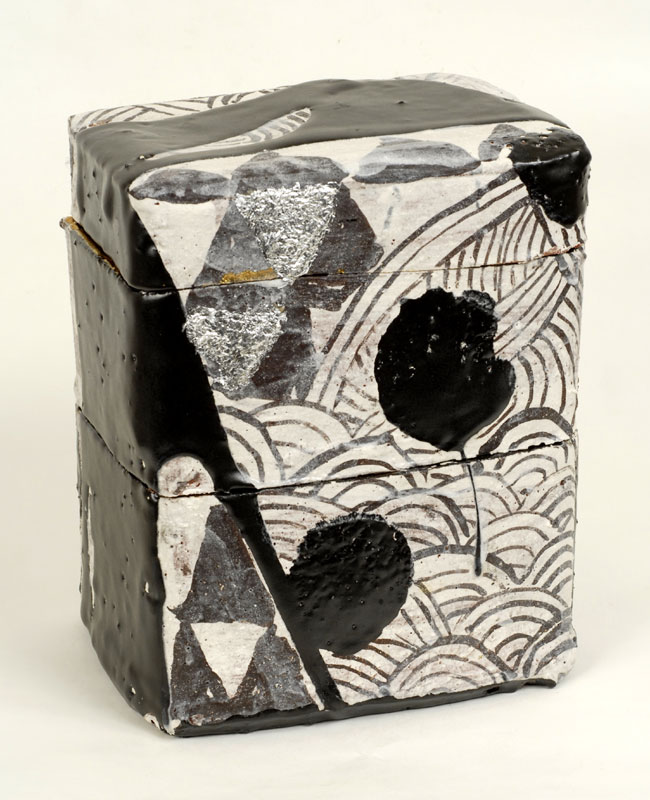
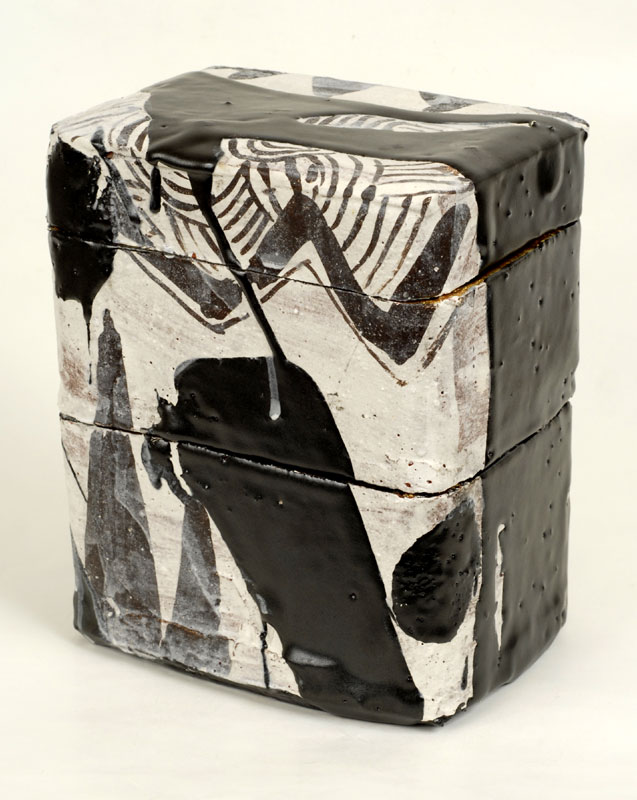
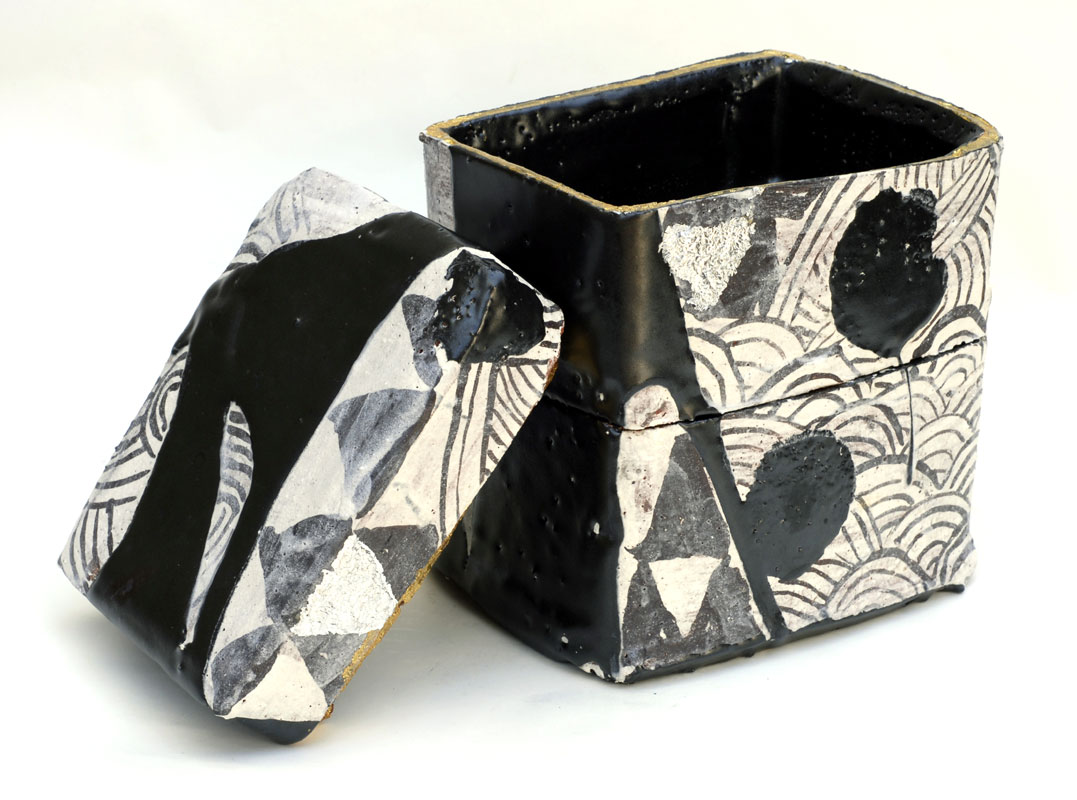
Yanagi attributed beauty of mingei to simple design and robust materials
meant for actual usage, rather than contrived elegance. Shinya Ono is
strongly influenced by this aesthetic concept. His ceramics are known
for crisp clean lines, simple forms, and tasteful decorations, a
timeless study in beauty and grace in the purest form. |
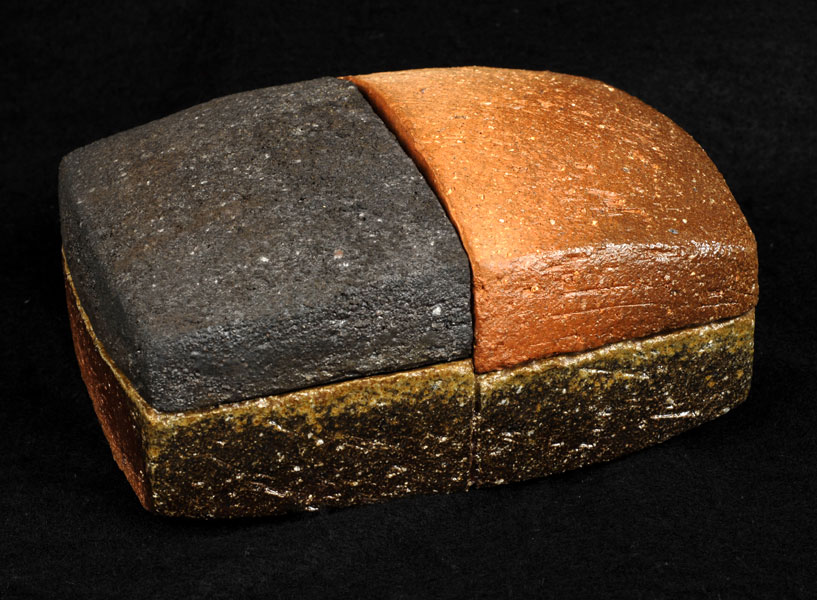
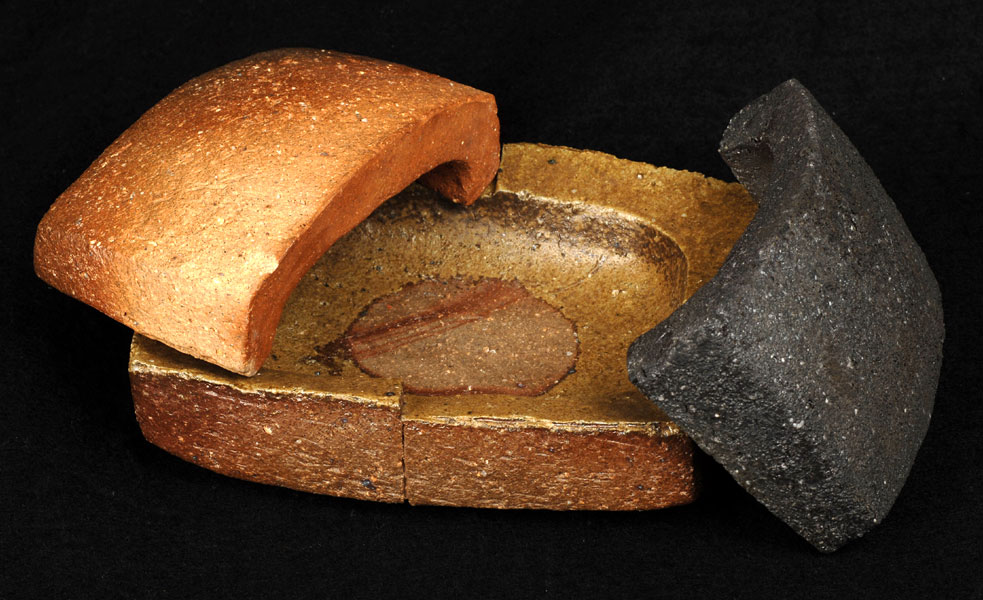
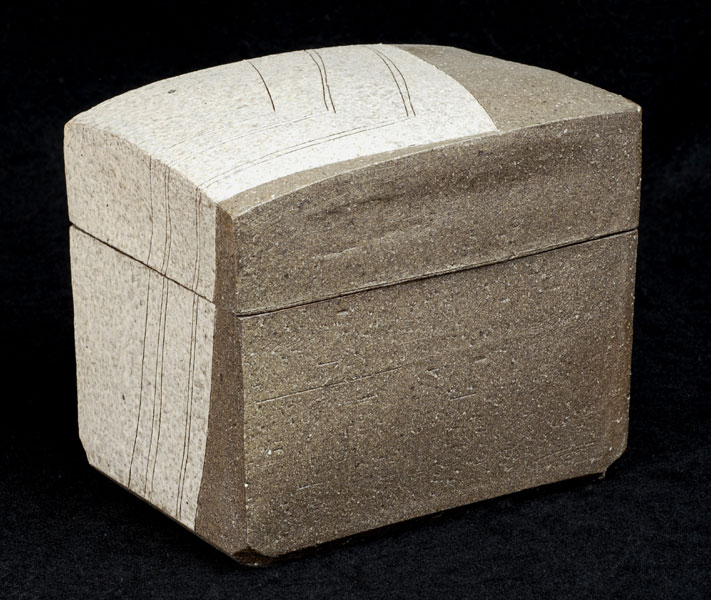
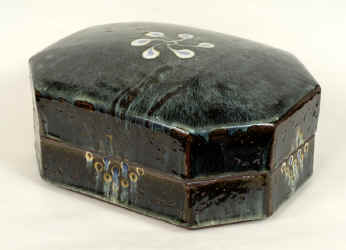 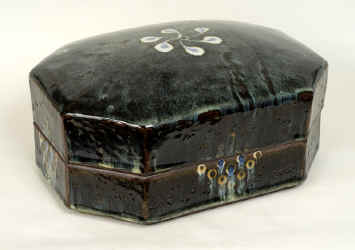 |
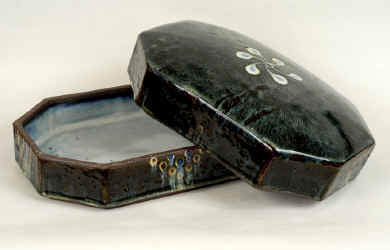
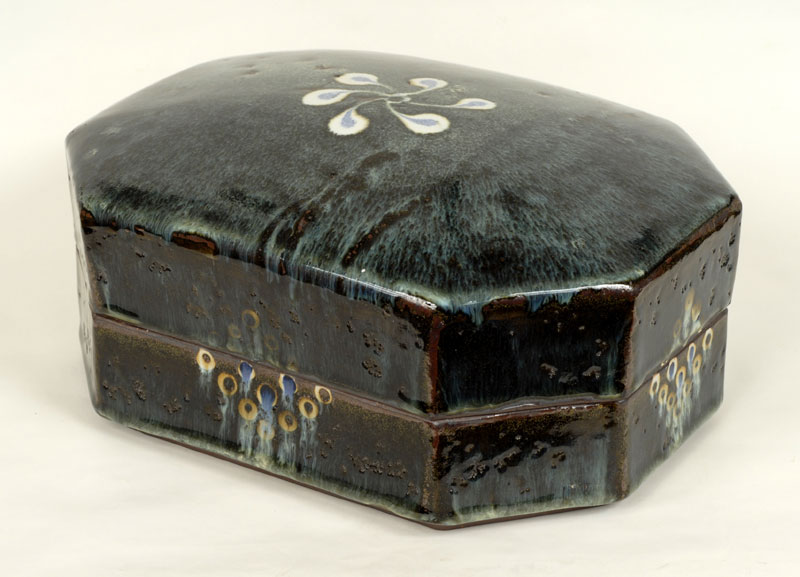
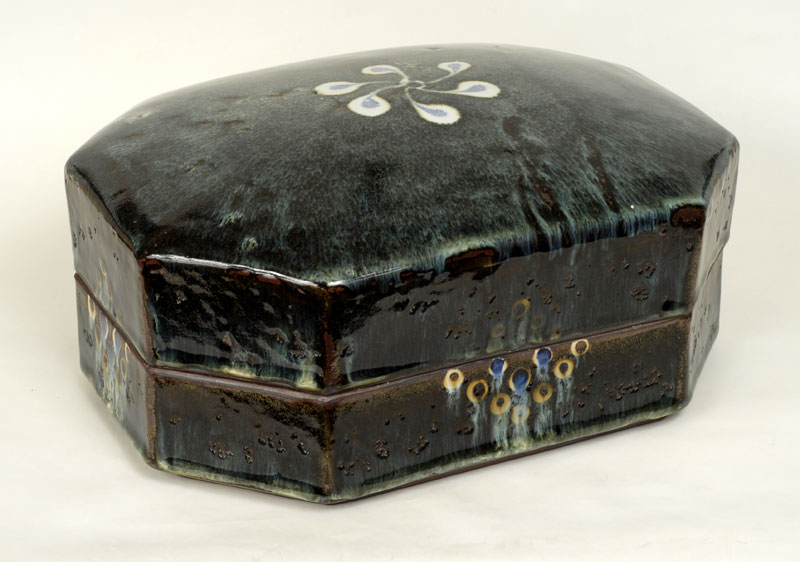
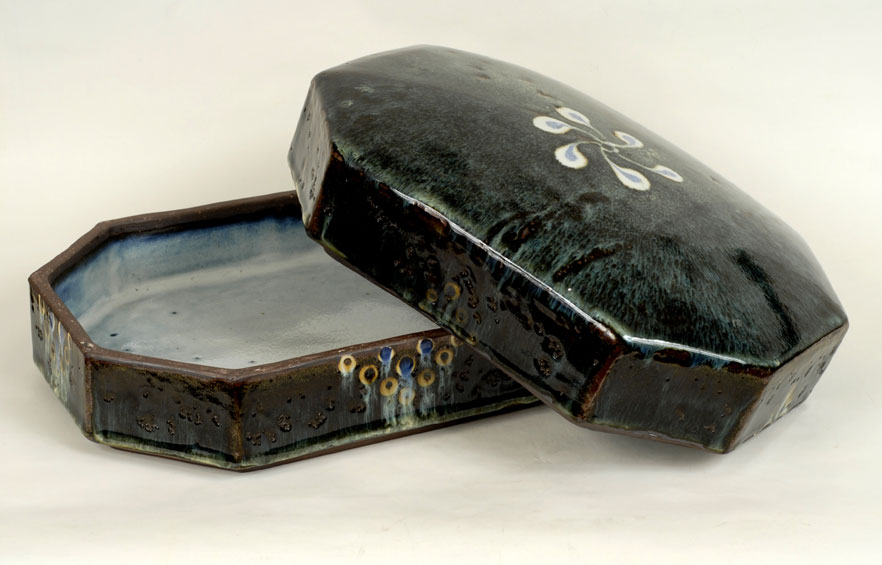
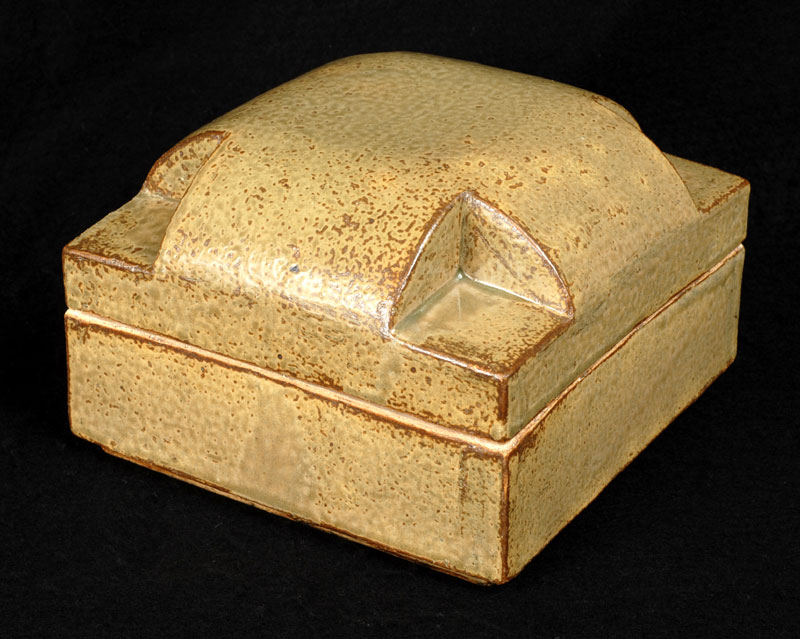
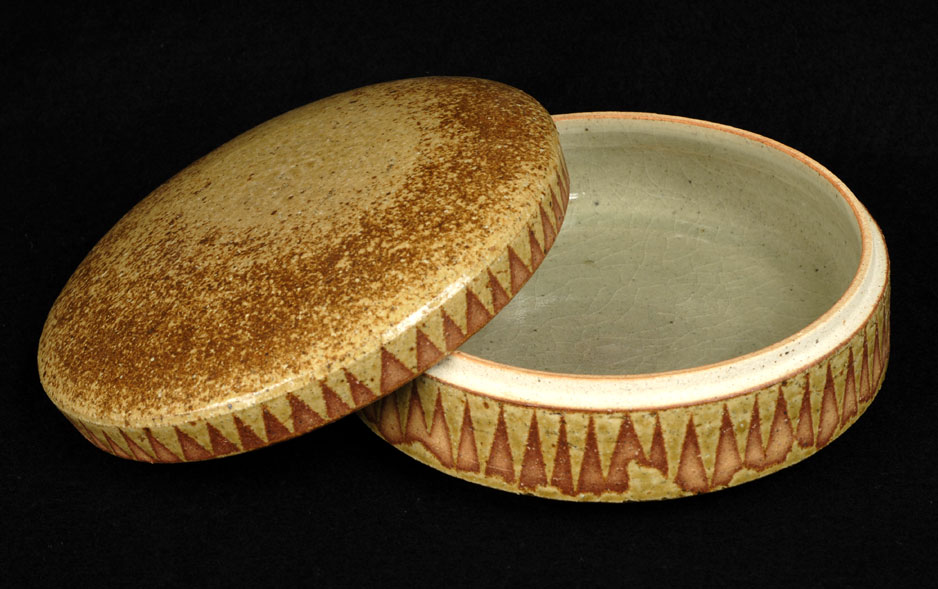
Shinya Ono Glazed ceramic box No. 2
11"w x 8"d x 5"h (3 views)
Sold
|
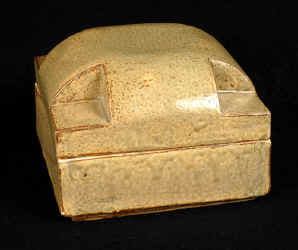 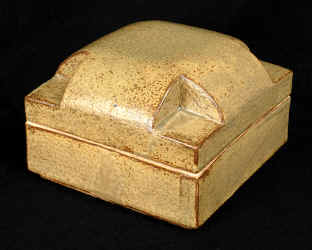 |
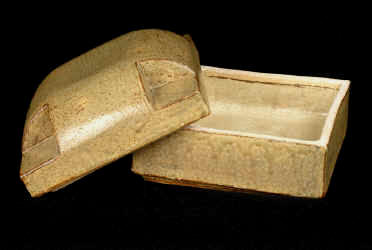
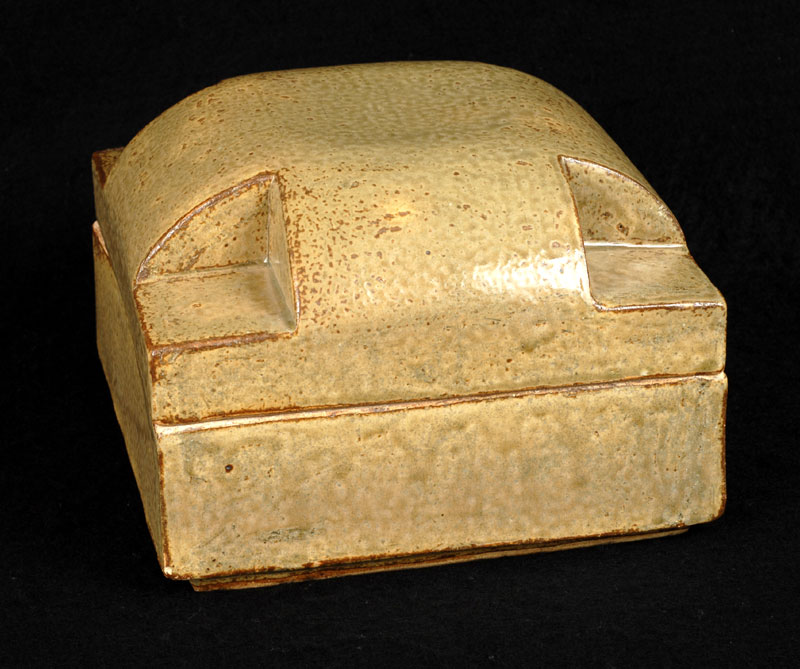
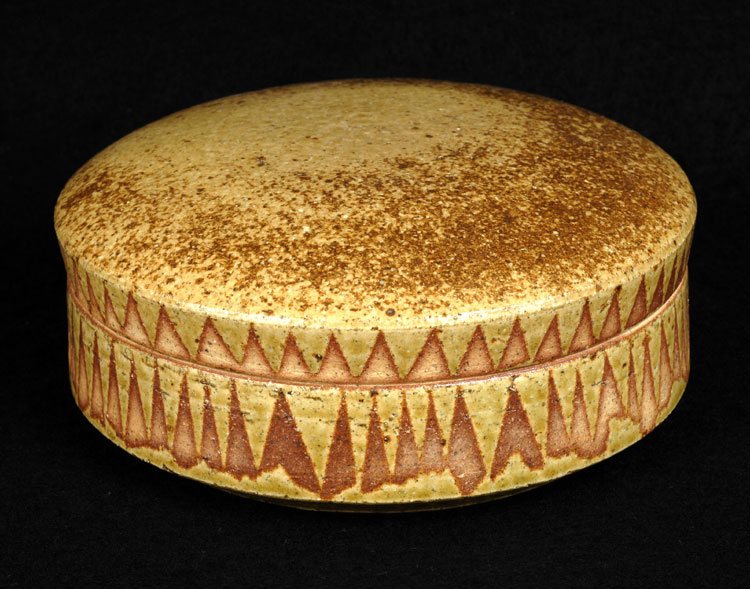
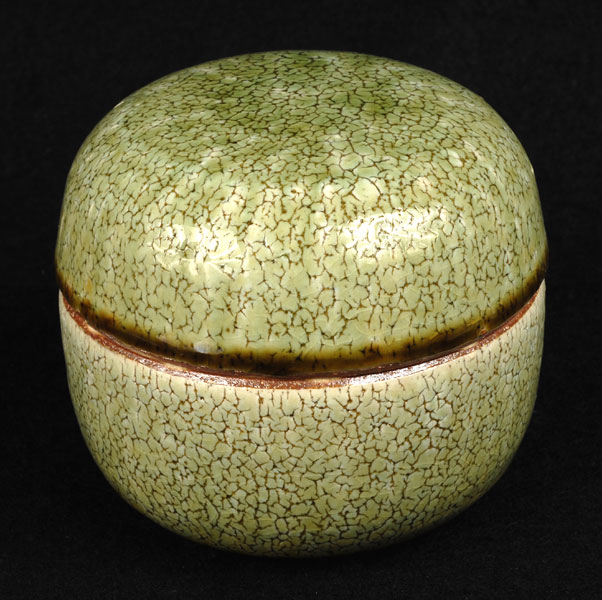
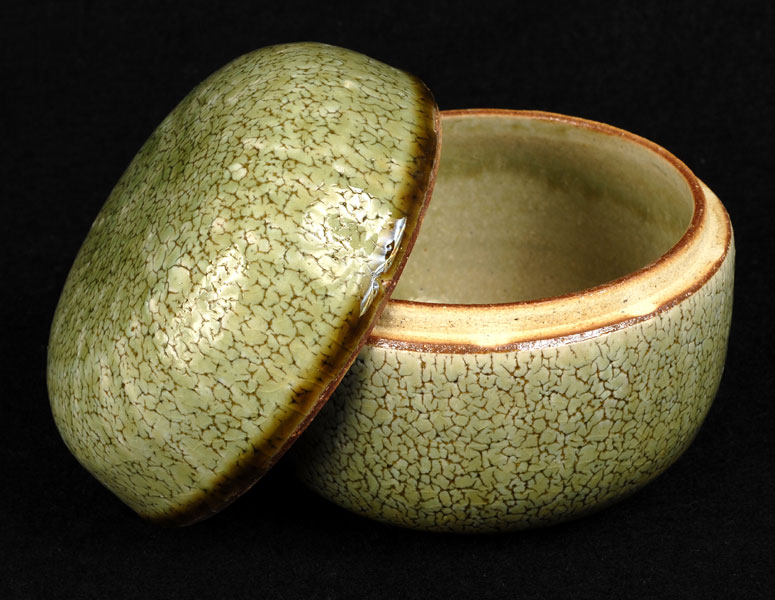
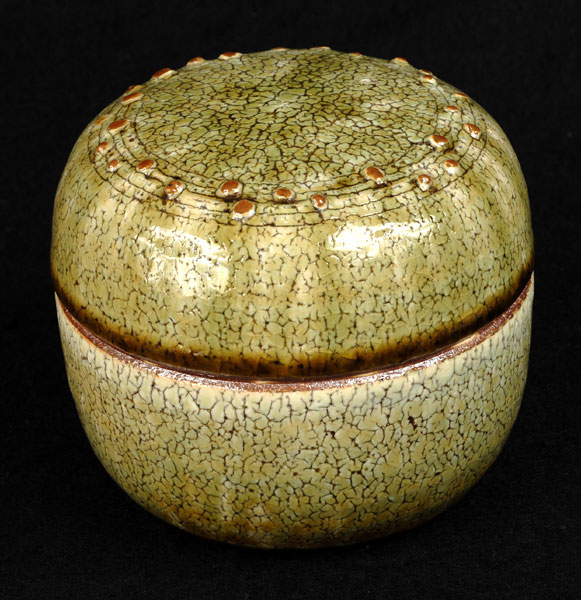
Shinya Ono Glazed ceramic box No. 3
7.5"w x 7.5"d x 5.5"h (3 views)
Sold
|
|
|
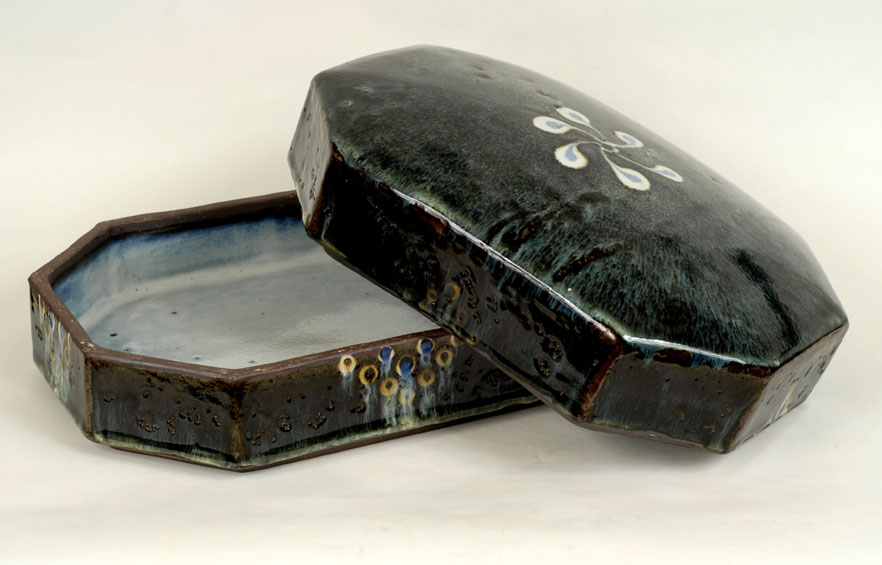
Moriyuki Ando
安籐百利行 (Gifu, Japan)
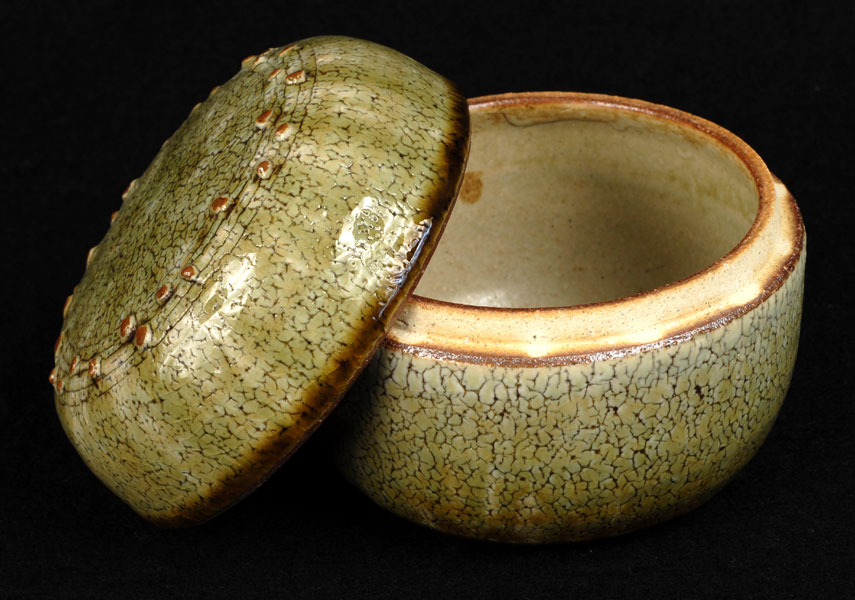
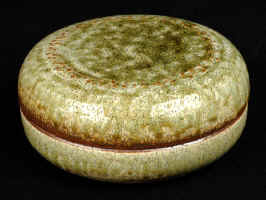
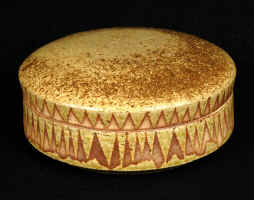
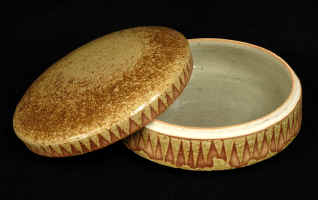
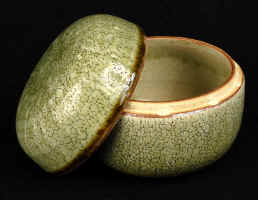
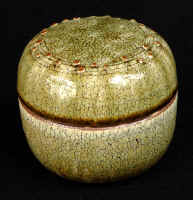
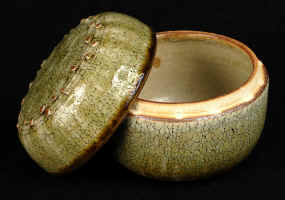
Moriyuki Ando (b. 1944), head of the Mizunami
Ceramics Guild in Mino, is best known for his innovative glazed pottery.
In the past four decades, he has developed some of the most beautiful
and distinctive award-winning finishes on ceramic. The current
exhibition features his Hai-yu Kai-ra-gi
(Ash glaze of Japanese
apricot blossom) and Hai-yu Sai-mon
(Ash glaze of colored
pattern) styles. |
|
|
 |
|
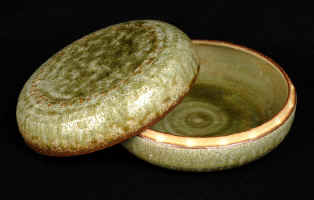
Moriyuki
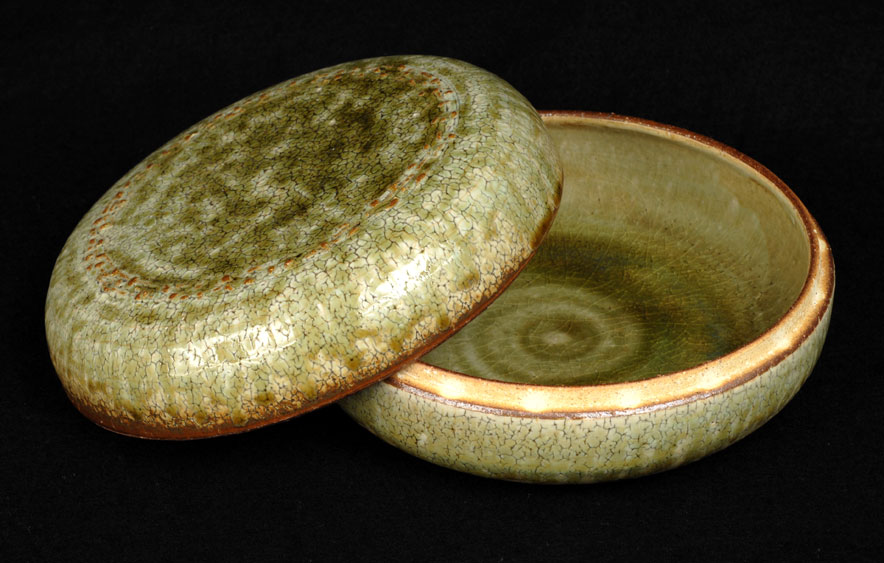
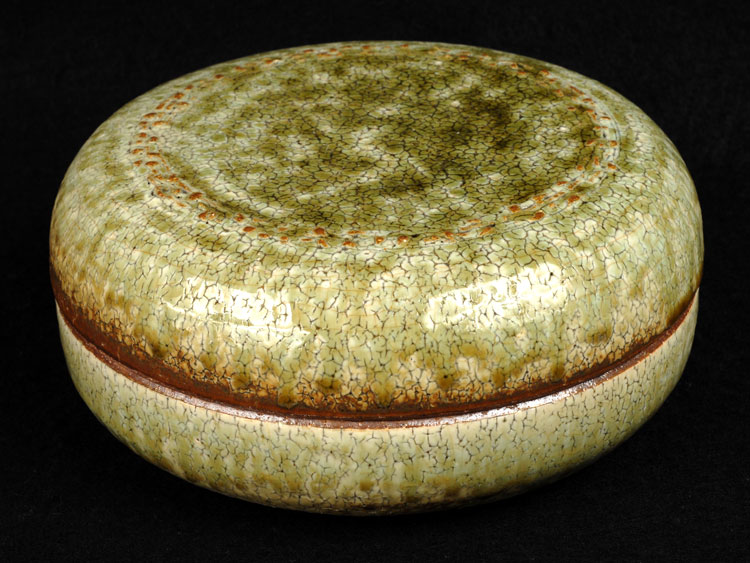
Ando Ceramic box No. 5 w/ Haiyu Kairagi glaze
8.5"w x
8.5"d x 3.5"h (2 views)
Sold
|
|
|
 |
|
Moriyuki
Ando Ceramic box No. 4 w/ Haiyu Saimon glaze
7.5"w x
7.5"d x 3.5"h (2 views)
Sold
|
|
|
|
|
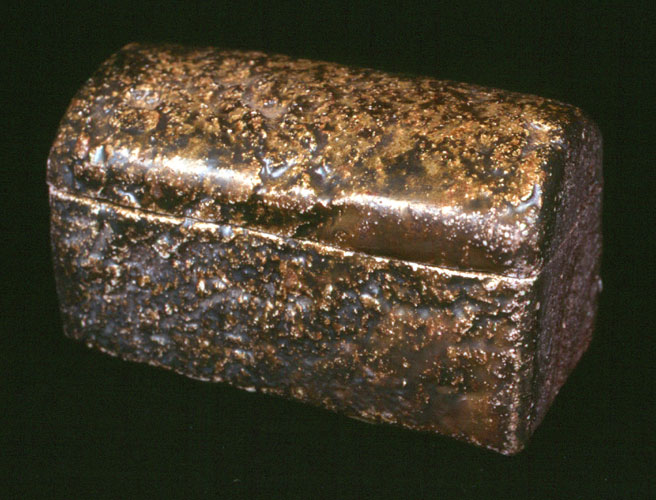
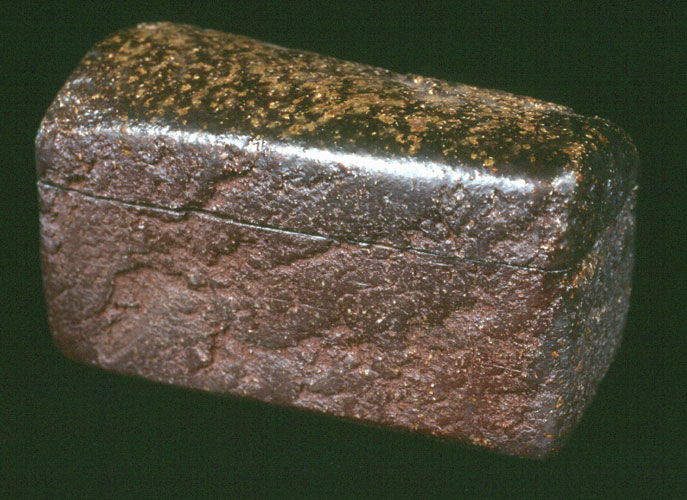
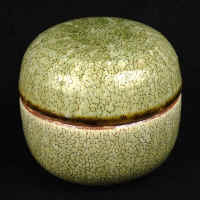
Moriyuki
Ando Ceramic box No. 6 w/ Haiyu Kairagi glaze
5"w x
5"d x 5"h (2 views)
Sold
|
Moriyuki
Ando Ceramic box No. 7 w/ Haiyu Kairagi glaze
5"w x
5"d x 5"h (2 views)
Sold
|
|
|
|
Hiroyuki Wakimoto
脇本博之
(Bizen, Japan)
Hiroyuki Wakimoto (B. 1952) received art training in
Osaka Art College. He apprenticed under George Yamashita, an
accomplished ceramist who studied under Bizen Living National Treasure
Jun Isezaki. With a great interest in forms and training in design,
Wakimoto creates some of the most interesting works in contemporary
Japanese ceramics. His works are instantly recognized by bold,
sophisticated forms with clean lines and beautiful fire markings. What
sets Wakimoto apart from many of his peers is his ability to produce an
astounding body of innovative work without abandoning the cultural
connection of this art form.
Discussing the evolution of his style, Wakimoto
recalled, "In the beginning, I cared too much about making my work
unique, my hands struggled with the clay. Then one day, I set my hands
free to express my feelings without thinking too hard. From that day, my
work became spontaneous." The Achilles heel of many innovative
ceramists is in their firing techniques, especially with a wood kiln.
Wakimoto’s mastery of the firing process is legendary. He does a
14-days firing once a year. This working style requires extraordinary
confidence and impeccable technical expertise. Wakimoto;s work won many
prestigious awards, including the Grand Prize of Yakishime Exhibition. |
|
|
 |
|
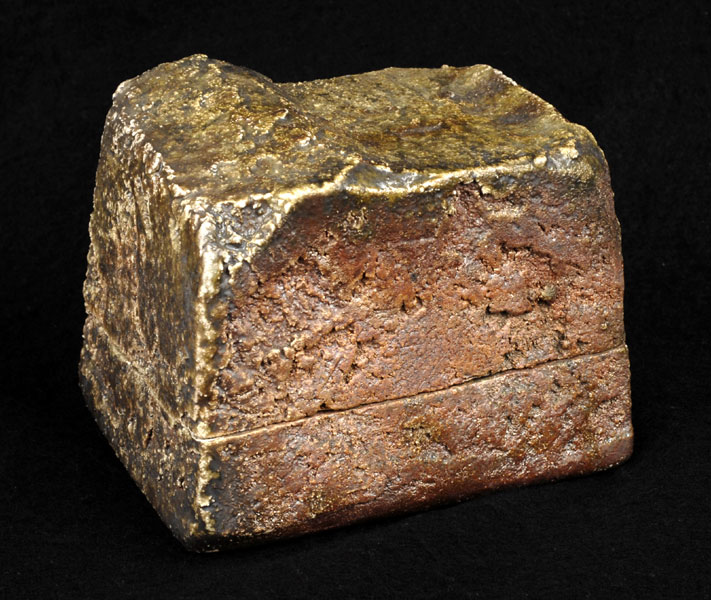
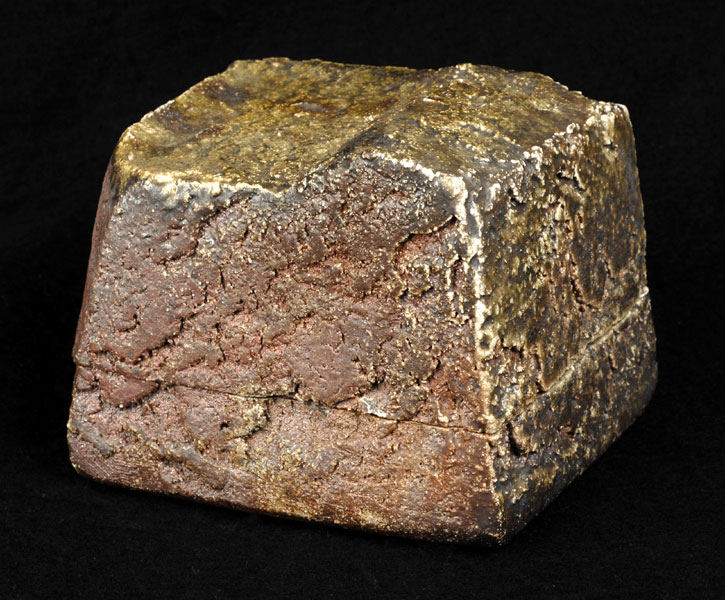
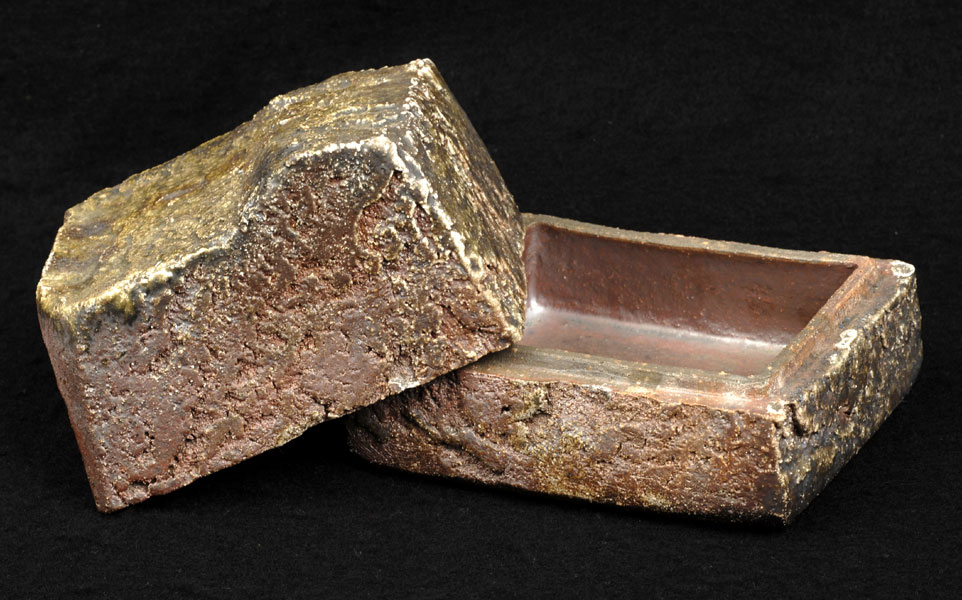
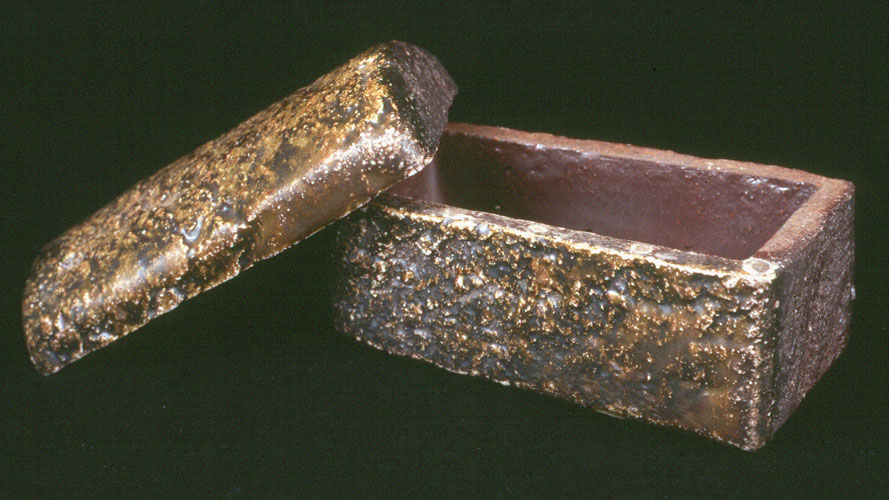
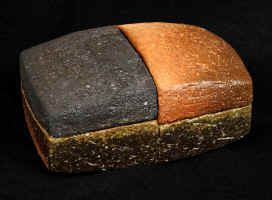
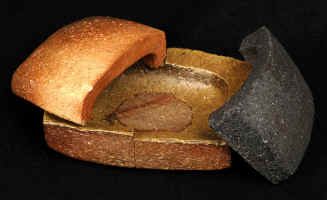
Hiroyuki
Wakimoto Wood-fired ceramic box No. 8
6.5"w x
4.5"d x 3.25"h (2 views)
Sold
|
|
|
Kiyoharu Ichino 市野清治 (Tanba, Japan)
Kiyoharu Ichino was born in 1957 in Tanba Tachikui into an extended
family steeped in pottery-making tradition. When he was twenty, he moved
to Seto to study pottery under a master of Akatsu-Yaki. Upon returning
to Tachikui, he launched his career with the Tanba Group Kiln. In 1983,
he established his own kiln and began showing in galleries all over
Japan. Ichino's work emphasizes the strength and natural beauty of Tanba
clay. He often leaves raw edges on his pieces to show the clay body. He
has been a permanent member of The Japan Crafts Association since 1995.
His work has been selected repeatedly for the prestigious juried Japan
Traditional Crafts Exhibition. |
|
|
 |
|
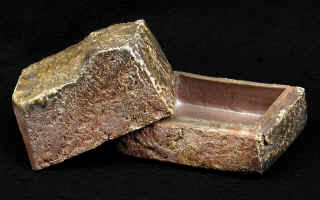
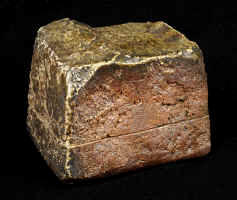
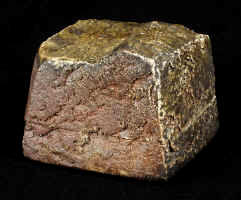
Kiyoharu
Ichino Wood-fired ceramic box No. 9
5.5"w x
4.5"d x 4.5"h (3 views)
Sold
|
|
|
 |
|
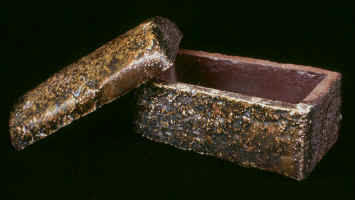
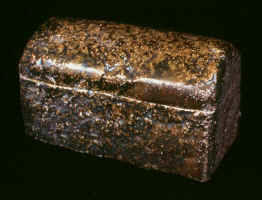
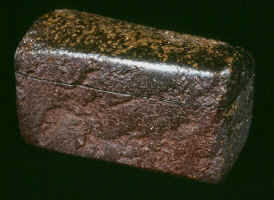
Kiyoharu
Ichino Wood-fired ceramic box No. 24
6"w x
3.5"d x 4"h (3 views)
Sold
|
|
|
|
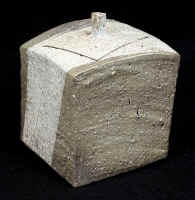
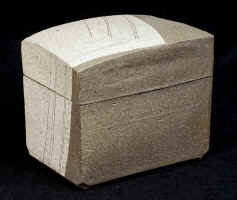
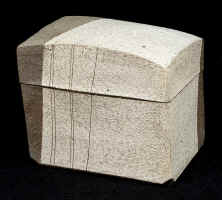
Keiichi Shimizu
清水圭一 (Tanba, Japan)
Keiichi Shimizu (b. 1962) is a 4th-generation Tanba
potter. He studied ceramic at Kyoto City Vocational School. Since
started his productive career in 1984, he has established himself as one
of the most innovative ceramist in Tanba.
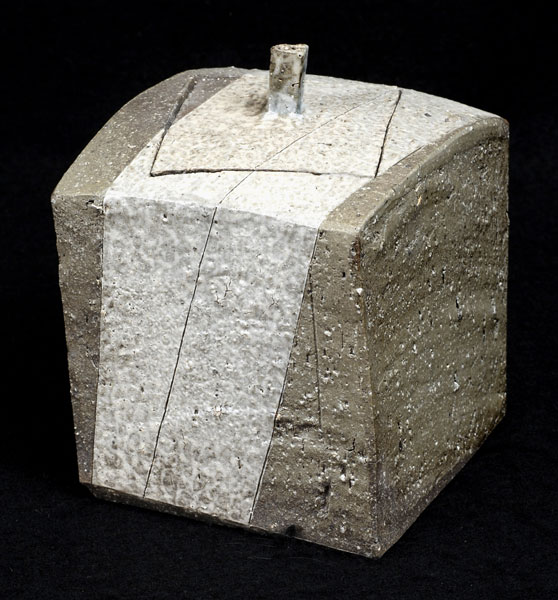
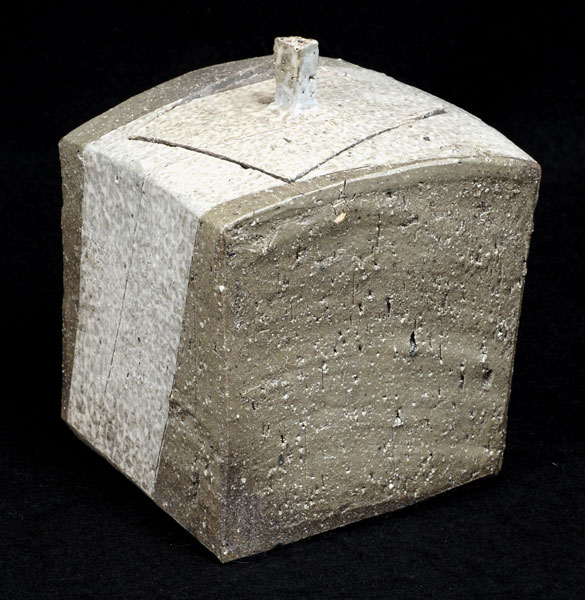
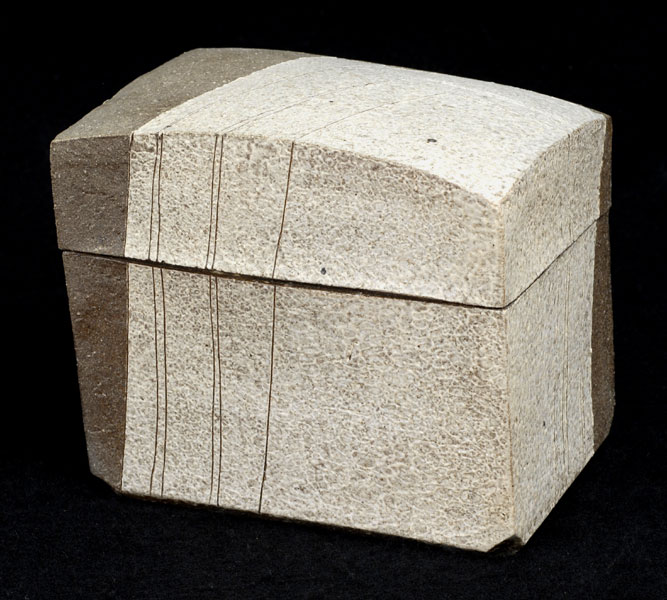
Shimizu is interested in three-dimensional interplay
of lines and surfaces, developing his original forms from slab-built
surfaces using clay of contrasting colors and textures. His works show a
strong minimalist influence, with clean lines and taut surfaces. Curves
are used sparingly and purposefully, to introduce tension that seems to
hold together the stark geometry. The results are deceptively simple
forms that belie great conceptual sophistication and meticulous
attention to details, a perfect balance between quiet traditional
Japanese aesthetic and dynamic modern interpretation. |
|
|
 |
|
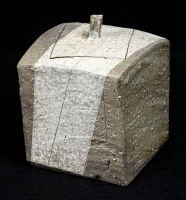
Keiichi
Shimizu Ceramic box No. 10
w/ white clay decoration
6"w x
5"d x 5"h (2 views)
Sold
|
|
|
 |
|
Keiichi
Shimizu Ceramic box No. 11 w/ white clay decoration
5.75"w x
5"d x 4.5"h (2 views)
Sold
|