| Home | Current show | Photography/Calligraphy | Show archives | Japanese pottery | Tea bowls | Sumi-e | Gallery tour | Wabi sabi |

Touching Stone Gallery Santa Fe New Mexico USA
www.touchingstone.com Email: director@touchingstone.com
Touching Stone Gallery Santa Fe New Mexico USA
www.touchingstone.com Email: director@touchingstone.com
|
Masamichi Terada |
|
Kakishibu 柿渋 Japanese art of dyeing with persimmon tannin |
|
|
|
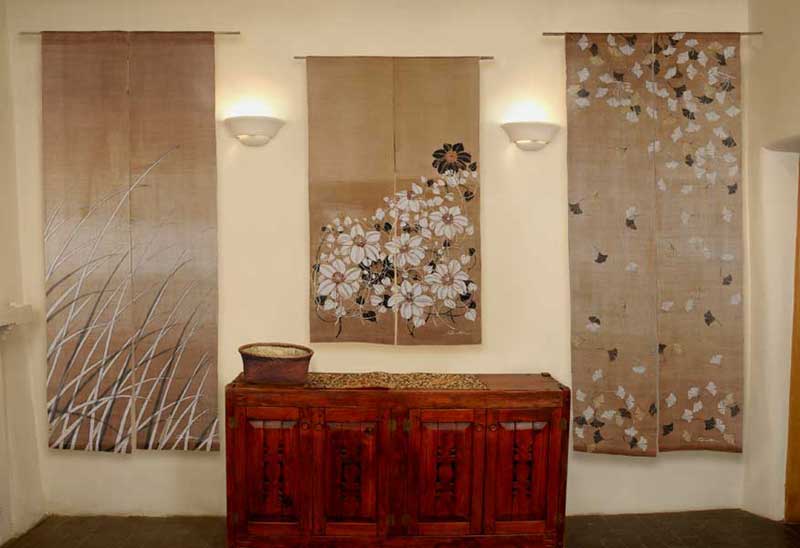
Masamichi Terada 寺田昌道 Touching Stone Gallery is privileged to show the new work of Masamichi Terada, master kakishibu artist and author on this traditional Japanese art of dyeing with persimmon tannin. Kaki-shibu, meaning 'persimmon-bitter', is a natural dye prepared from the fermented juice of unripe persimmons. Kakishibu is not for artists seeking instant gratification. Persimmon juice must be aged for two to five years to acquire its beautiful warm colors. Unlike other dyes such as the more popular indigo, kakishibu not only adds colors, it actually coats the materials with a protective film that makes the materials water-resistant. Kakishibu was one of the most widely used preservative and weather-proofing agents in Japan since the Heian Period (782 – 1182 AD). Kakishibu-dyed paper was used for everyday items from umbrellas to food containers, and even for decorating traditional Japanese rooms, giving them quiet warm hues that become more beautiful with age. Because of its non-toxic nature, kakishibu was also the material of choice for treating ‘sake pouches’ (Pouches used for filtering unrefined sake in the manufacture process). However, since the Second World War, kakishibu has largely been supplanted by modern paints and chemicals. The ancient art of dyeing with kakishibu appeared to be on its way to extinction when it attracted the attention of Masamichi Terada. Masamichi Terada (b. 1935) graduated from Kanazawa College of Art. He started his career as a designer for Minolta Camera. One day his wife brought home some old kakishibu-dyed sake pouches. Intrigued by the subtle beauty of the material, Terada wanted to learn how the material was created. He soon realized that the knowledge of kakishibu-dyeing was not readily available. He decided to devote his life to study and preserve kakishibu-dyeing as an art form. In 1984, he founded the Terada Product Design company specializing in this medium. In 1995, he opened a gallery and studio in Hyogo Prefecture and has since immersed himself in this ancient art form. He authored two publications on kakishibu-dyeing techniques. He taught and organized workshops to pass on his knowledge, and has been invited to speak on the subject in lectures and television presentations. Terada has been creating highly original works using a variety of techniques. Some designs are created with stencils (katazome), others are meticulously painted by hand. Another technique is to draw with a cone (tsutsugaki) containing a dye-resistant paste to create negative images. Through his creative works, Terada has elevated kakishibu from a utilitarian medium to an art form that blurs the line between functionality and art. The current show highlights a spectacular body of work which includes norens, tapestries, and washi-covered bamboo baskets that showcase the artist's mastery of this extraordinary medium. Addendum: Sadly, Mr. Terada passed away on December 15, 2015. This show is dedicated retrospectively to honor Mr. Terada.
Click on images to view selected pieces Inquiry/order: director@touchingstone.com, see Inquiry/Order |
|
|
|
|
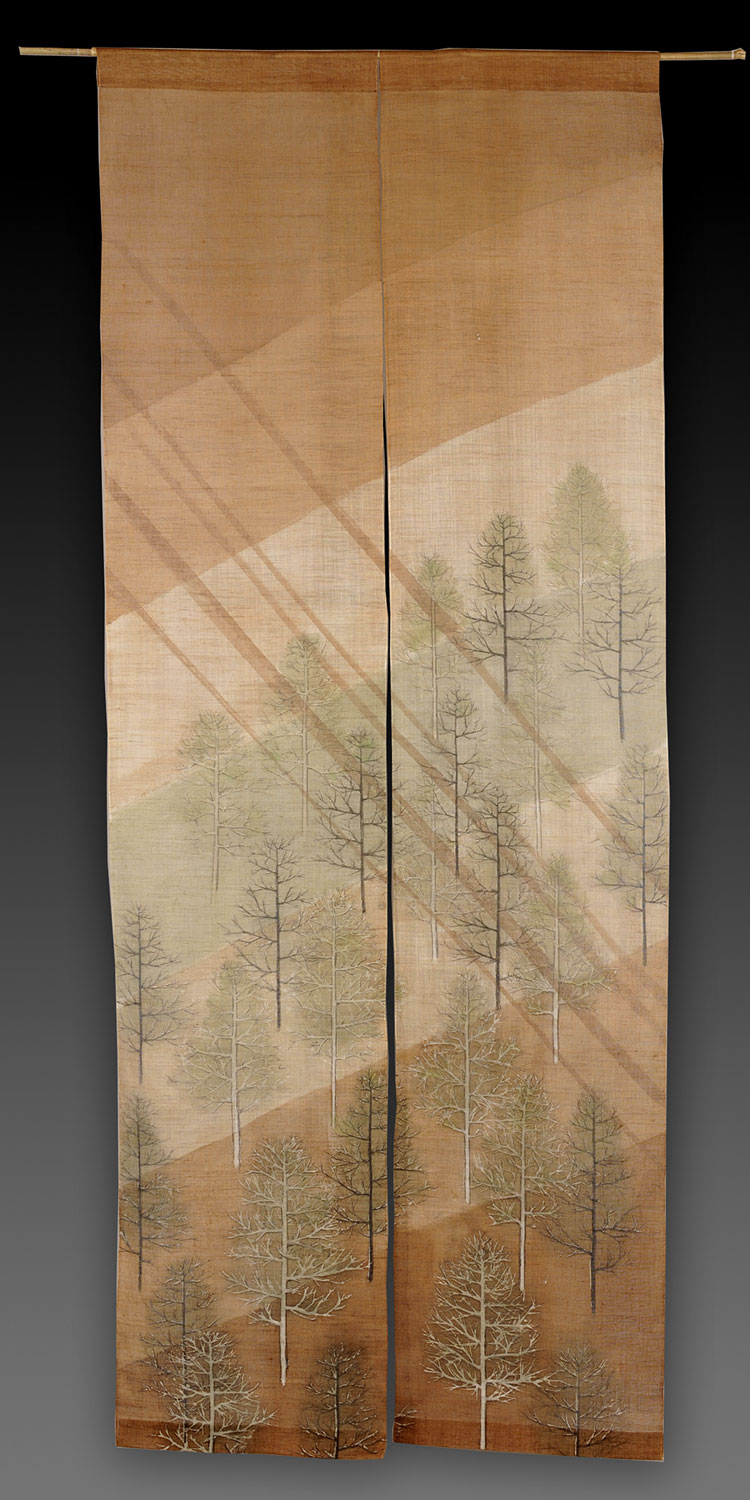
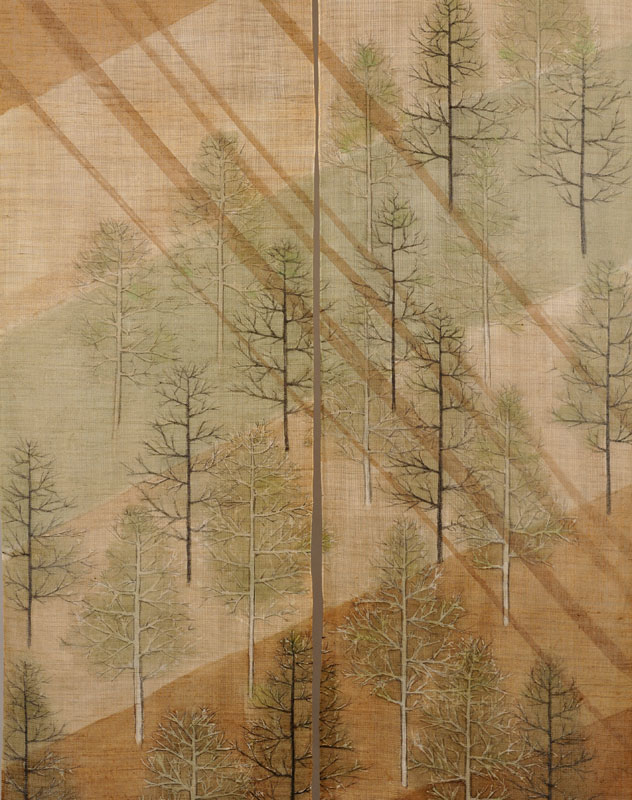
Noren* No. 1 Cedar Forest Linen, kakishibu w/ modifiers, tsutsugaki (Inset: Details) *All norens are finished on both front and back for display as wall hangings or partitions in a room. Sold
|
|
|
|
|
|
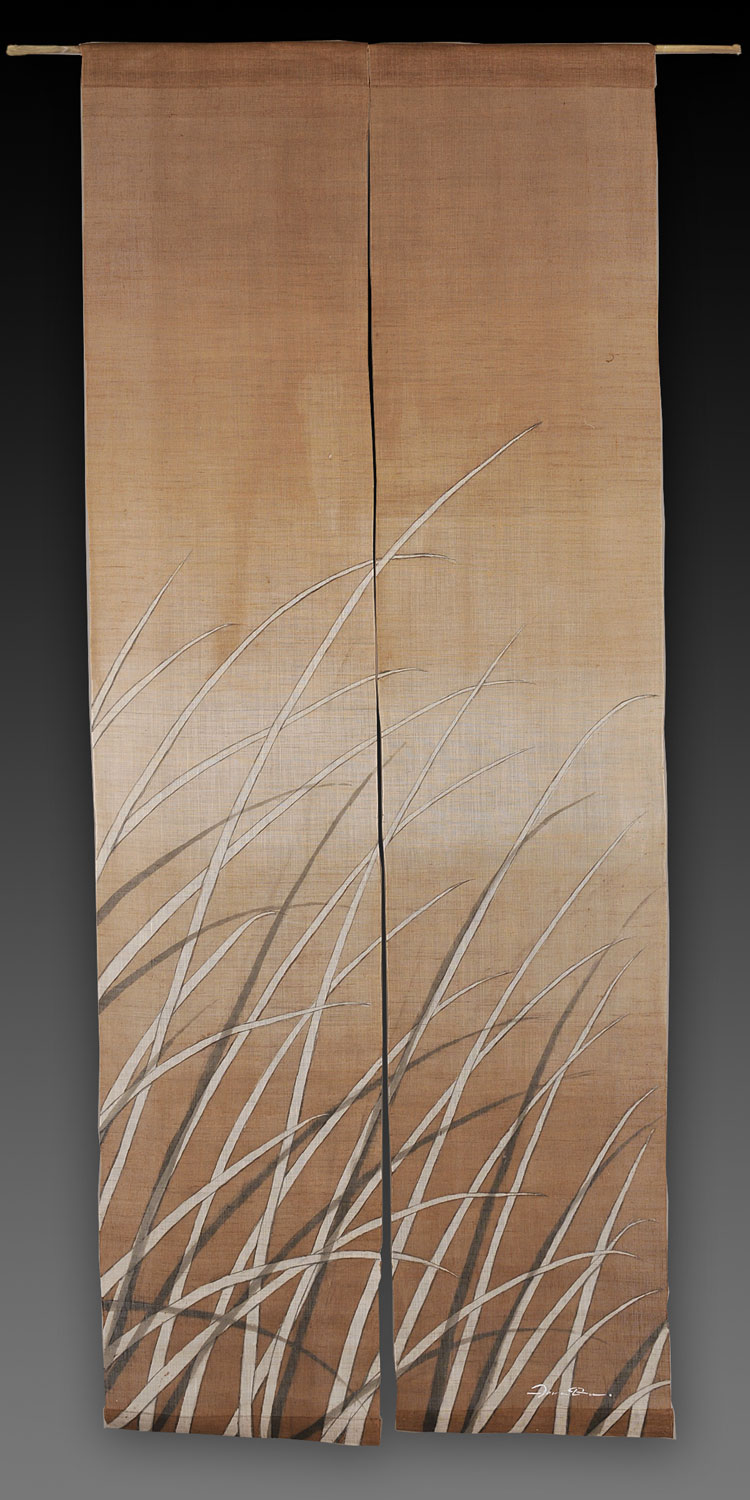
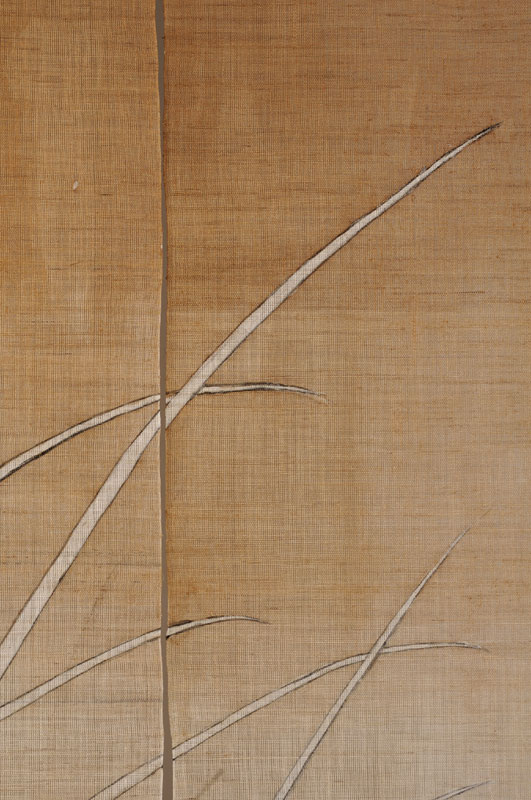
Noren No. 5 Susuki (Pampas) 85.5" x 34.5" Linen, kakishibu w/ modifiers, tsutsugaki (Inset: Details) Sold
|
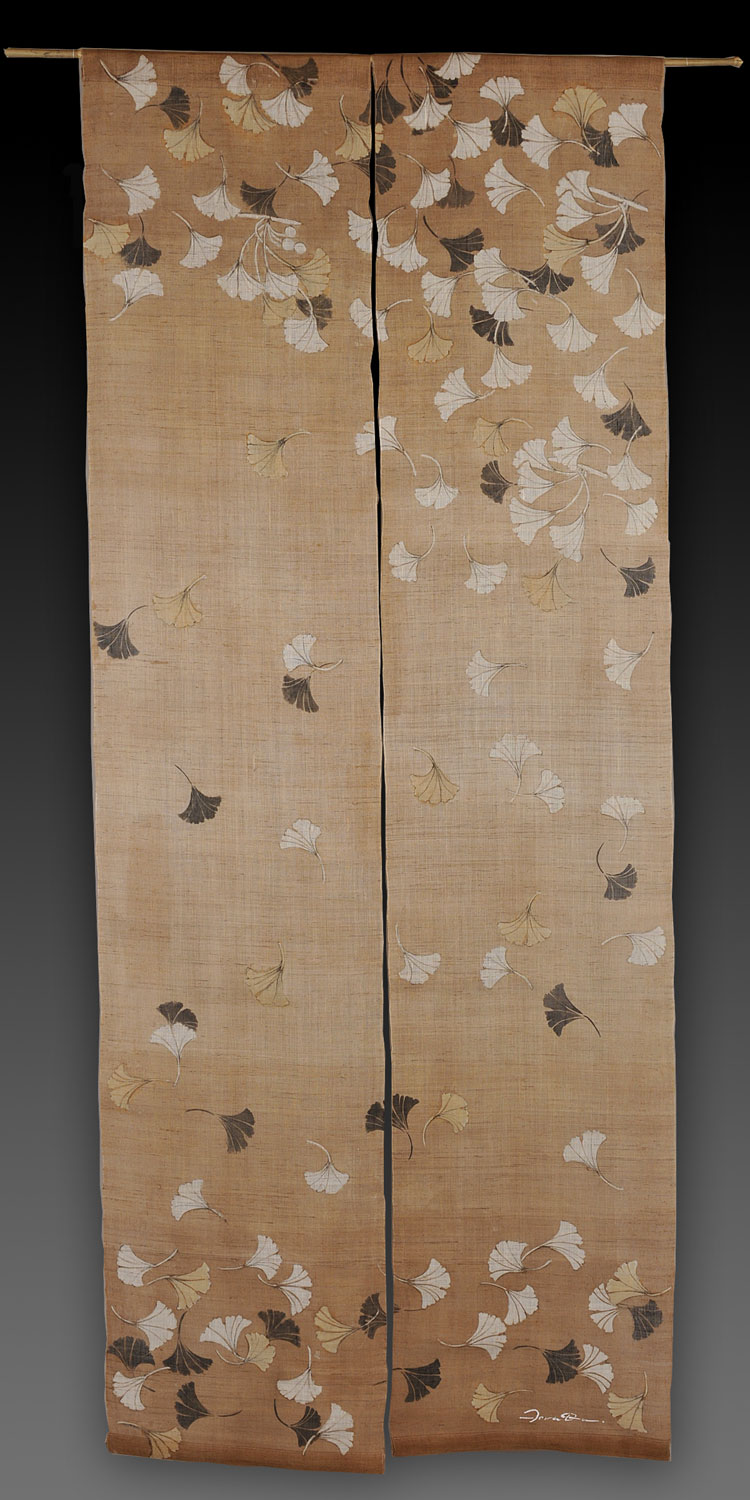
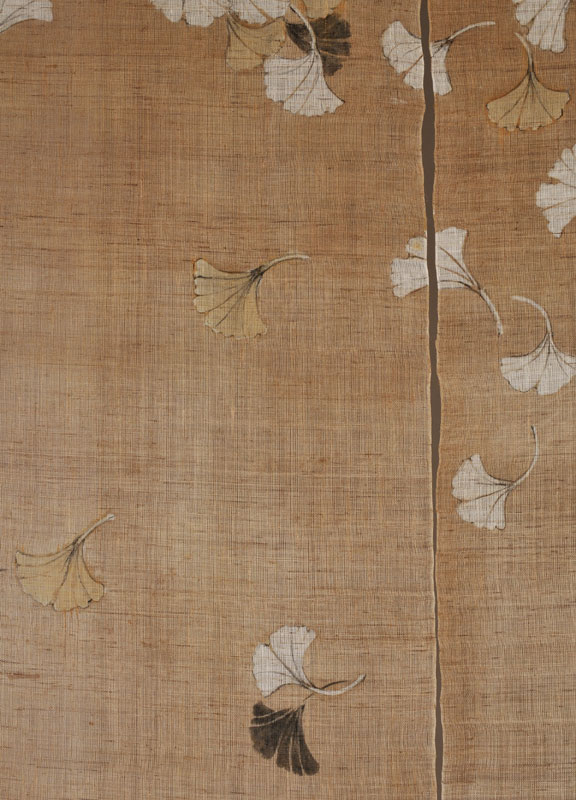
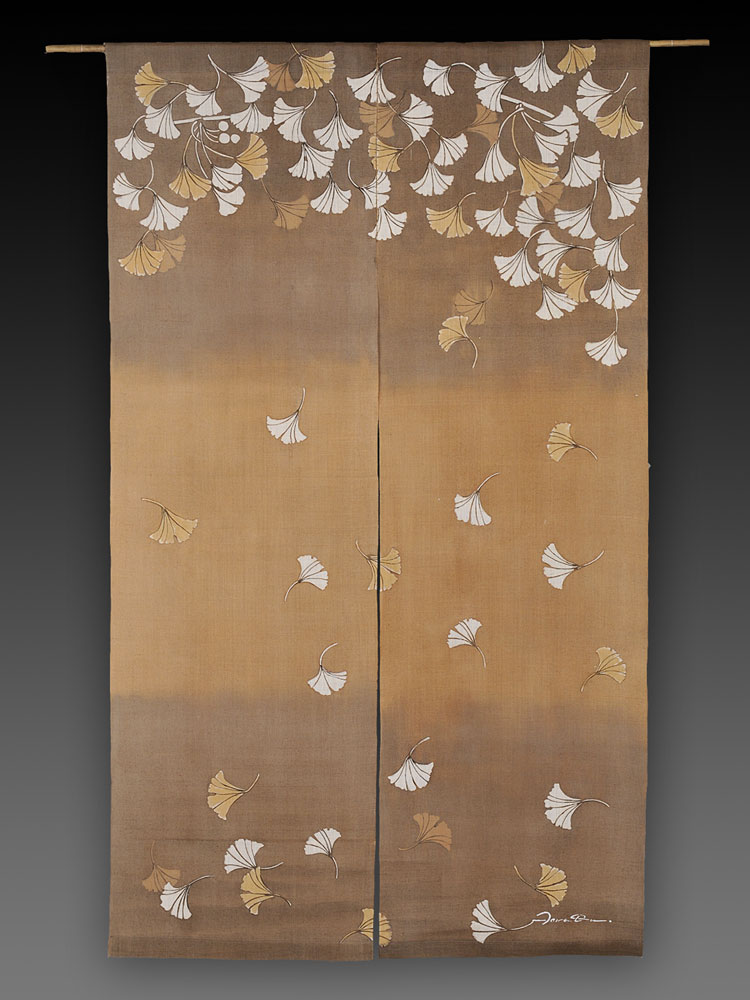
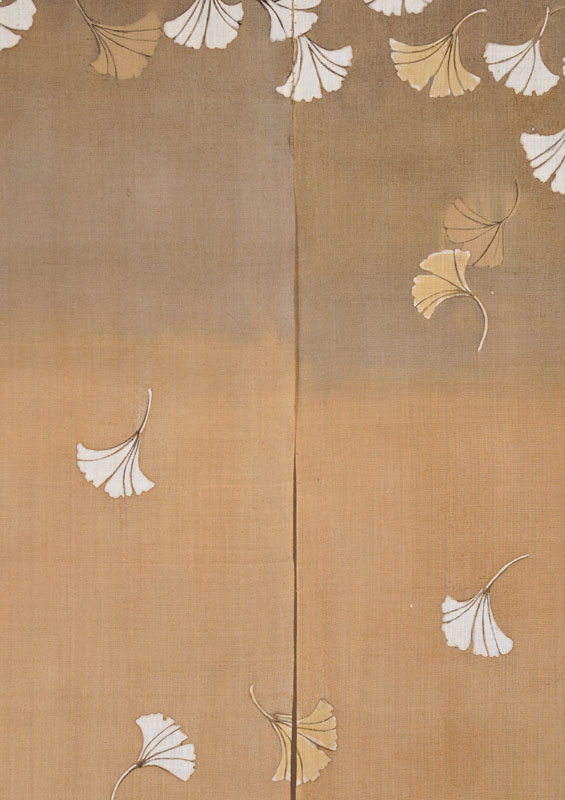
Noren No. 6 Icho (Ginkgo) 86" x 35" Linen, kakishibu w/ modifiers, katazome & tsutsugaki (Inset: Details)
|
|
|
|
|
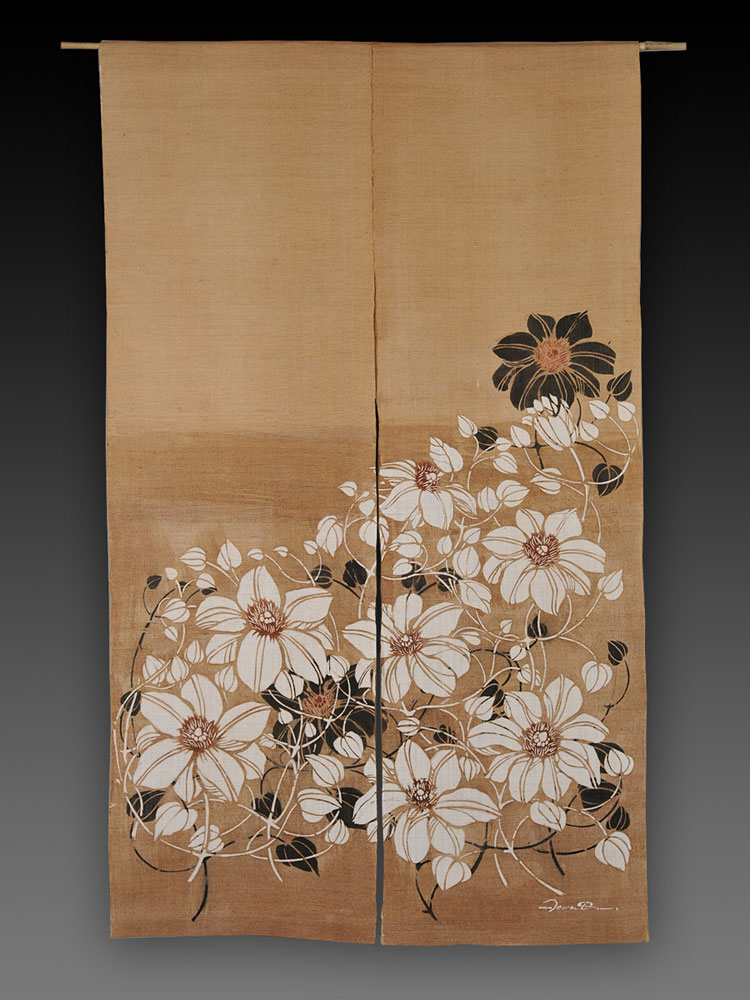
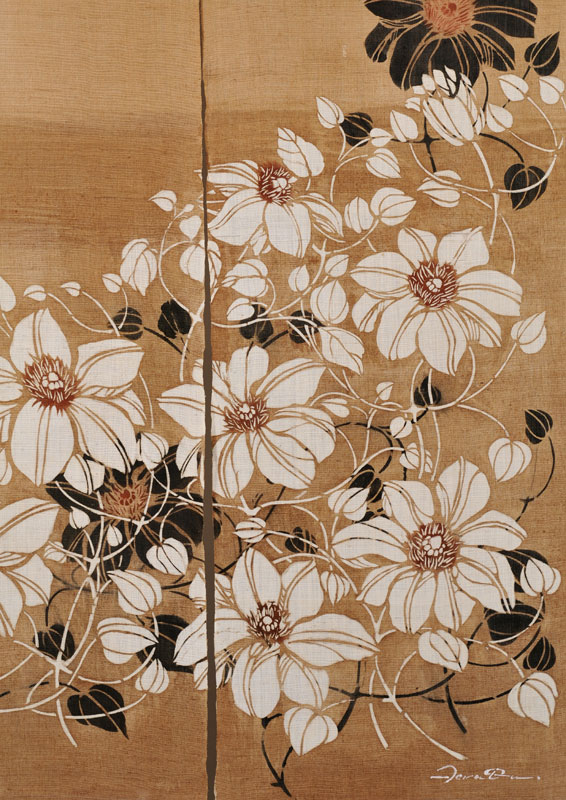
Noren No. 2 Tessen (Clemantis) 58.5" x 35" Linen, kakishibu w/ modifiers, katazome & tsutsugaki (Inset: Details)
|
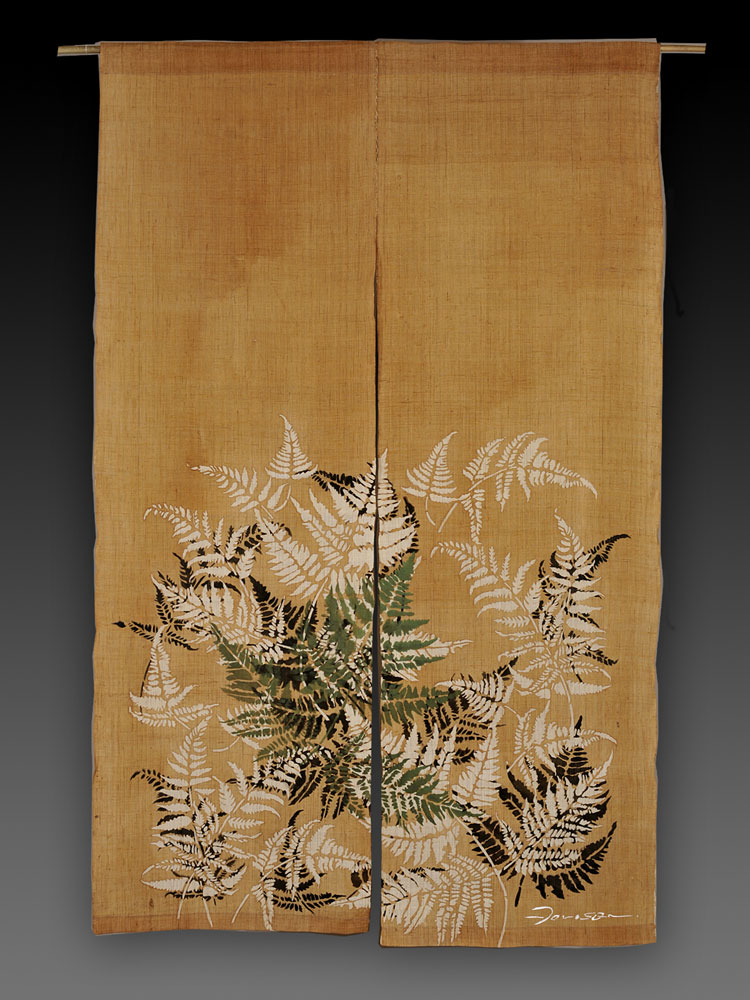
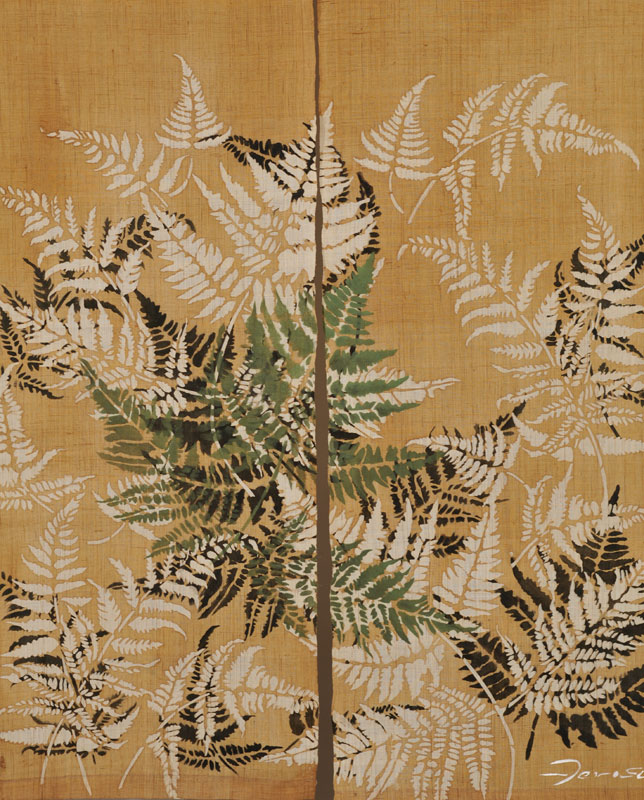
Noren No. 3 Shida (Fern) 58" x 36" Linen, kakishibu w/ modifiers, katazome & tsutsugaki (Inset: Details)
|
|
|
|
|
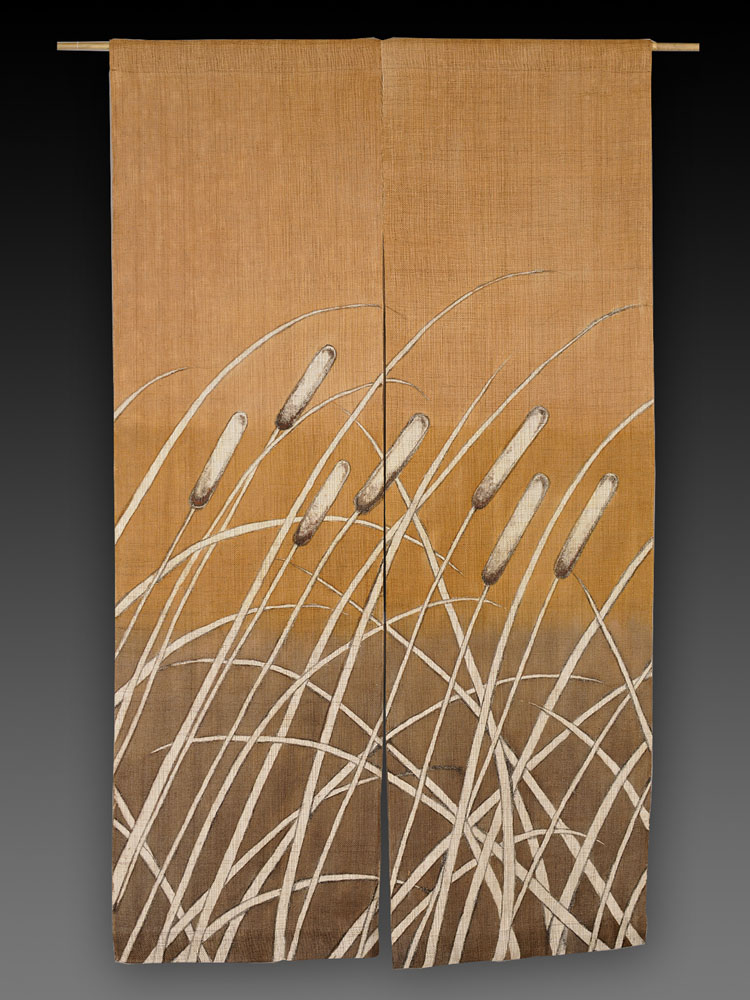
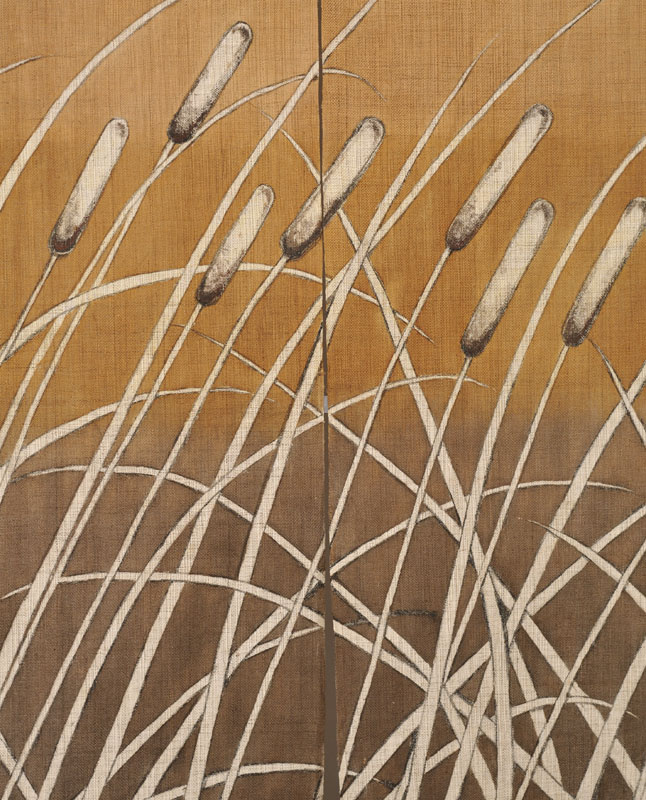
Noren No. 4 Gama (Vasco) 58" x 34" Linen, kakishibu w/ modifiers, tsutsugaki (Inset: Details)
|
Noren No. 7 Icho (Ginkgo) 61" x 35" Linen, kakishibu w/ modifiers, katazome & tsutsugaki (Inset: Details) Sold
|
|
|
|
|
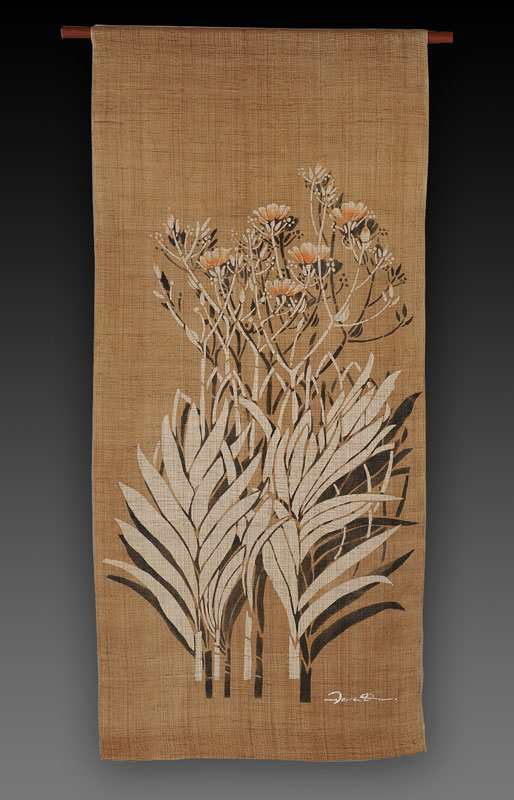
Tapestry No. 8 Hiogi (Iridaceae) 50.5" x 23" Linen, kakishibu w/ modifiers, katazome
|
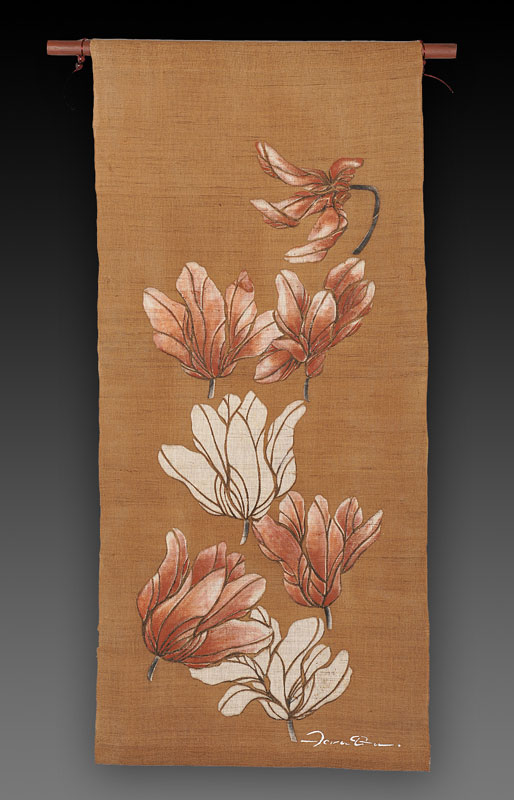
Tapestry No. 9 Shikramen (Cyclamen) 38" x 17.5" Linen, kakishibu w/ modifiers, tsutsugaki Sold
|
|
|
|
|
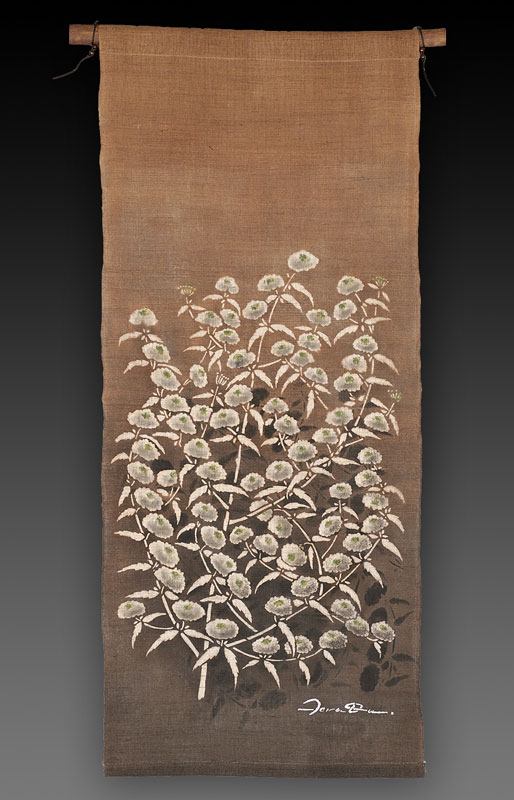
Tapestry No. 10 Kodemari (Reeves spirea) 41" x 17.5" Linen, kakishibu w/ modifiers, tsutsugaki Sold
|
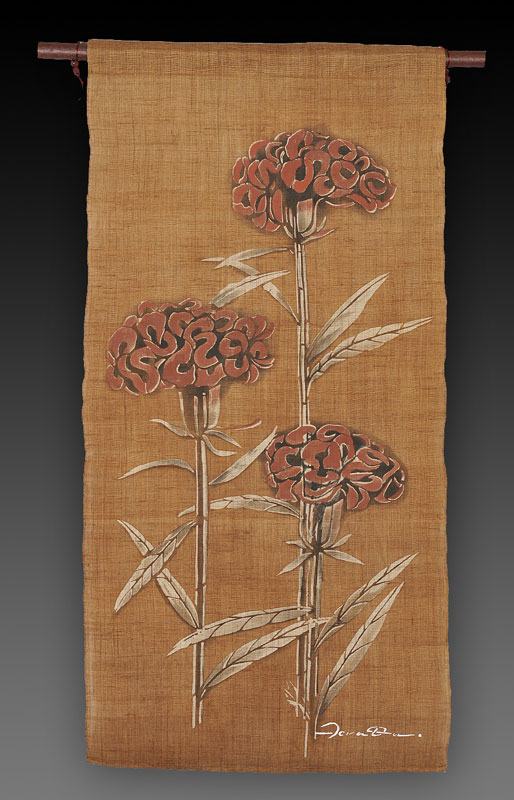
Tapestry No. 11 Keito (Cockscomb) 36" x 17.5" Linen, kakishibu w/ modifiers, katazome
|
|
|
|
|
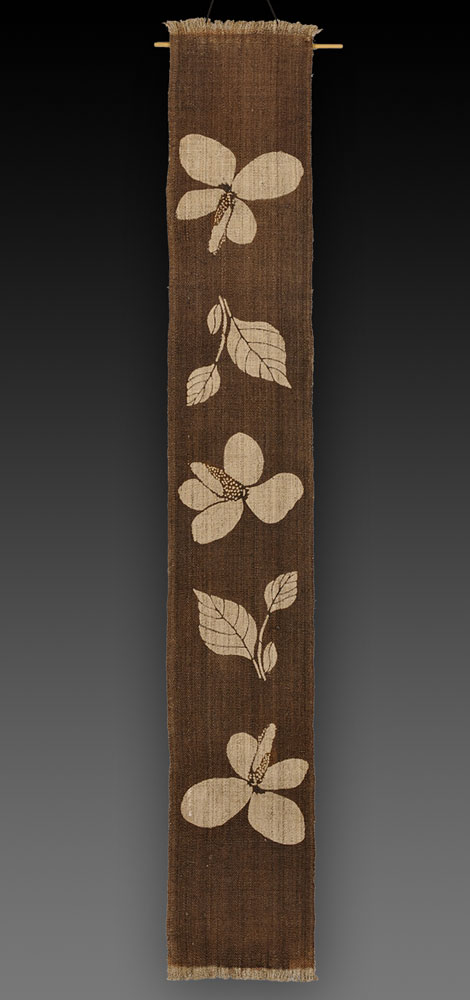
Tapestry No. 13 Ran (Orchid) 49" x 7.5" Linen, kakishibu w/ modifiers, katazome Sold
|
Tapestry No. 14 Ran (Orchid) 49" x 7.5" Linen, kakishibu w/ modifiers, katazome
|
|
|
|
|
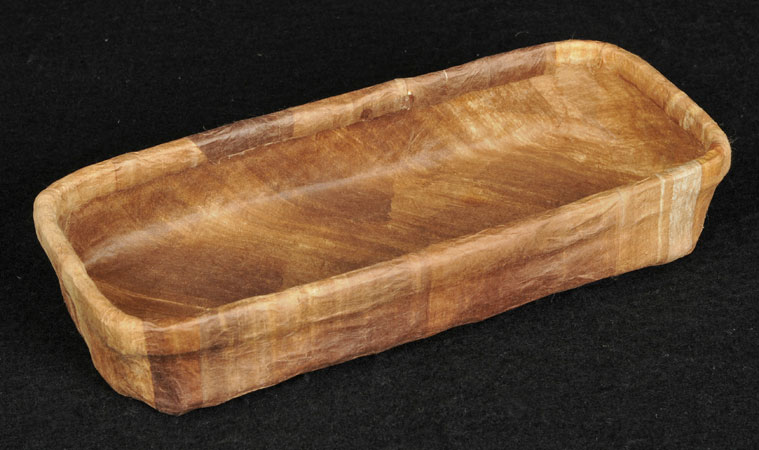
Basket No. 15 11" x 4.5" x 2" Washi-covered bamboo, kakishibu w/ modifiers, hand-painted Sold
|
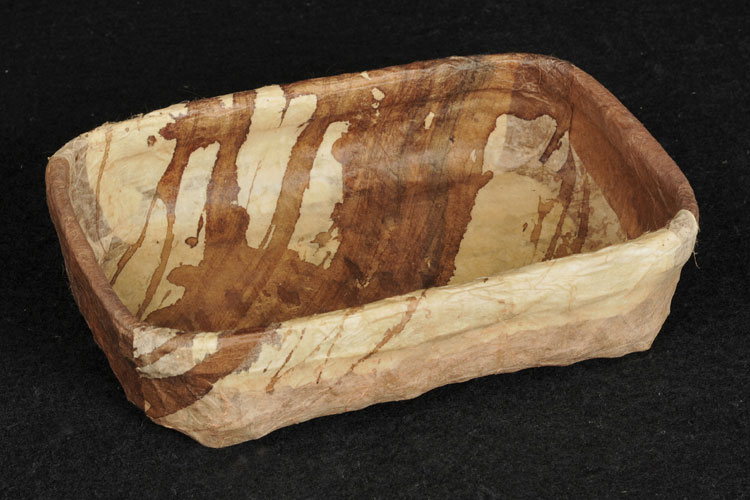
Basket No. 16 8.5" x 5.5" x 2" Washi-covered bamboo, kakishibu w/ modifiers, hand-painted
|
|
|
|
|
Basket No. 17 11" x 8.5" x 2.5" Washi-covered bamboo, kakishibu w/ modifiers, katazome Sold
|
Basket No. 18 9.5" x 9.5" x 2.5" Washi-covered bamboo, kakishibu w/ modifiers, katazome Sold
|
|
|
|
|
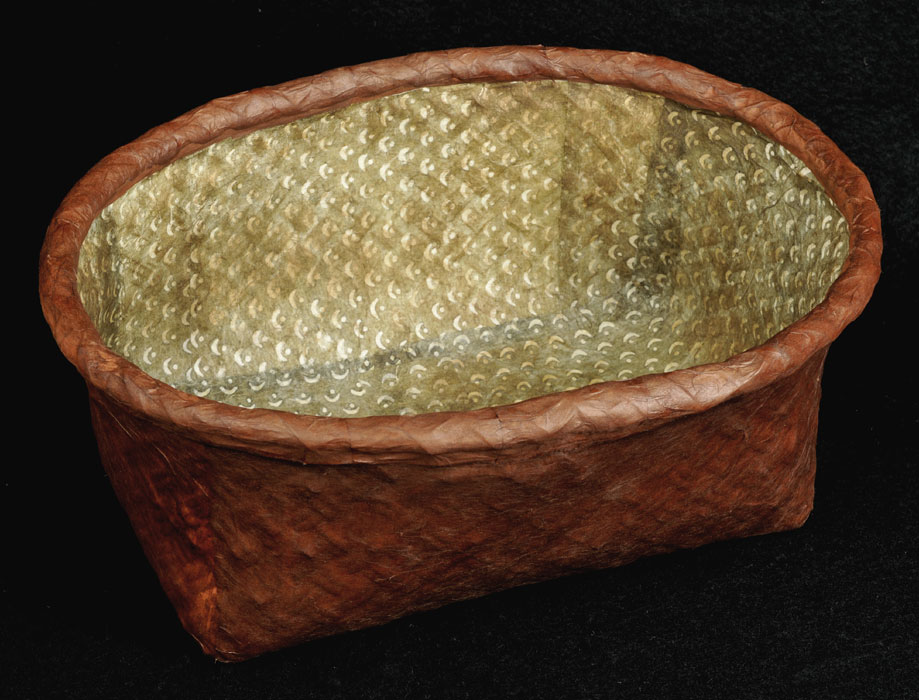
Basket No. 19 14.5" x 10.5" x 6.5" Washi-covered bamboo, kakishibu w/ modifiers, katazome
|
|
|
|
|
|
Mat No. 21A & 21B Hidden 16.5" x 7" ea. Linen, kakishibu w/ modifiers 21A Sold 21B Sold
|
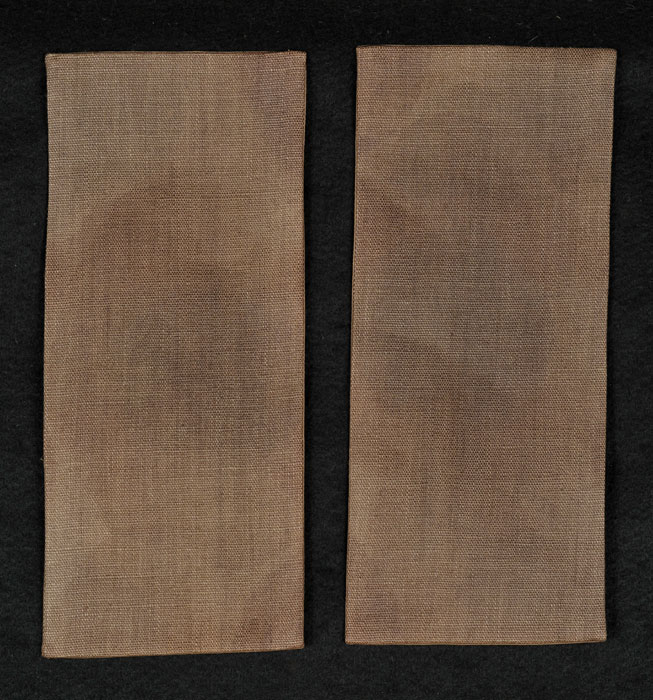
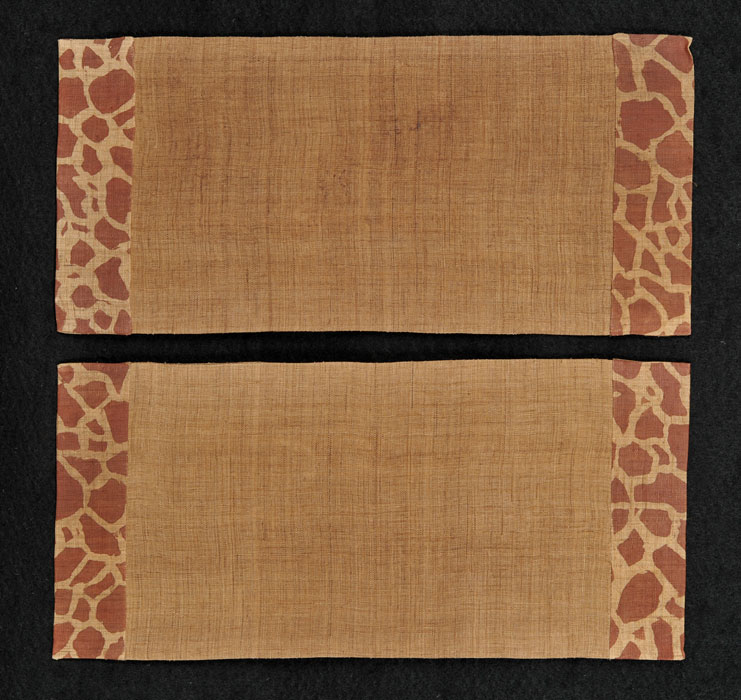
Mat No. 22A & 22B Stones 17" x 8" ea. Linen, kakishibu w/ modifiers, tsutsugaki
|
|
|
|
|
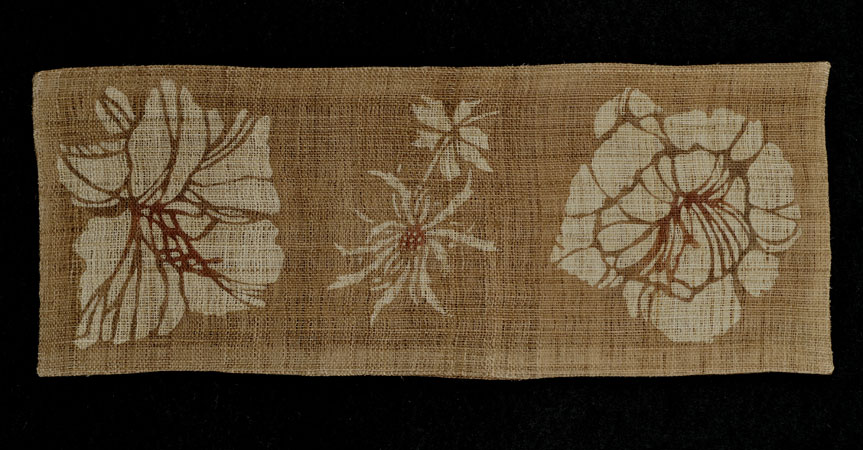
Mat No. 23 Gladiolus 17.5" x 6.5" Linen, kakishibu w/ modifiers, katazome
|
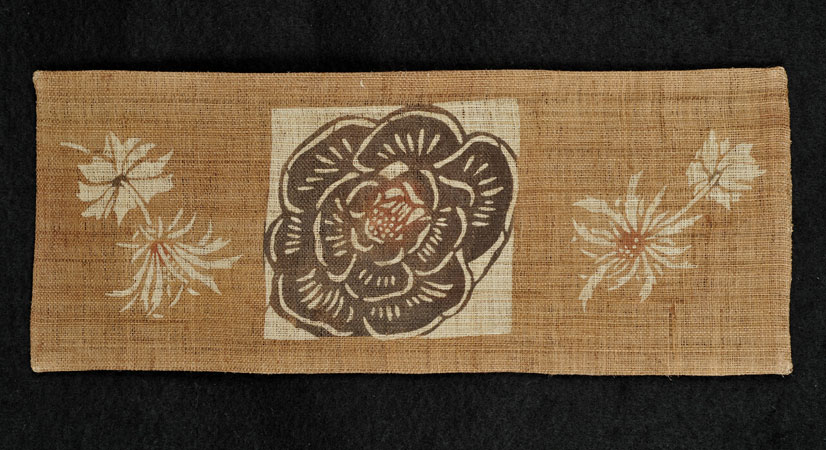
Mat No. 24 Rose 18" x 7" Linen, kakishibu w/ modifiers, katazome Sold
|
|
|
|
|
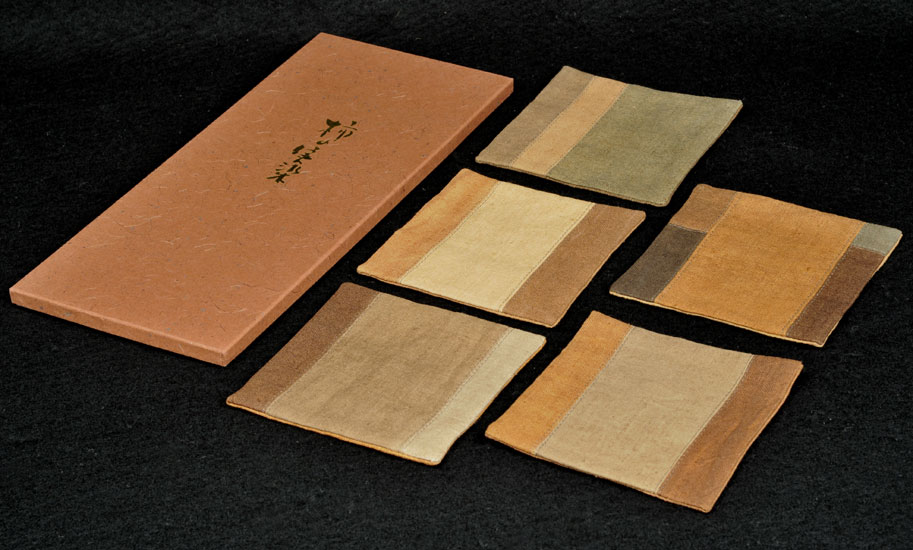
Coaster set No. 26 Ran (Orchid) 5/box 4.75" x 4.75" ea. Linen, kakishibu w/ modifiers, katazome Sold
|
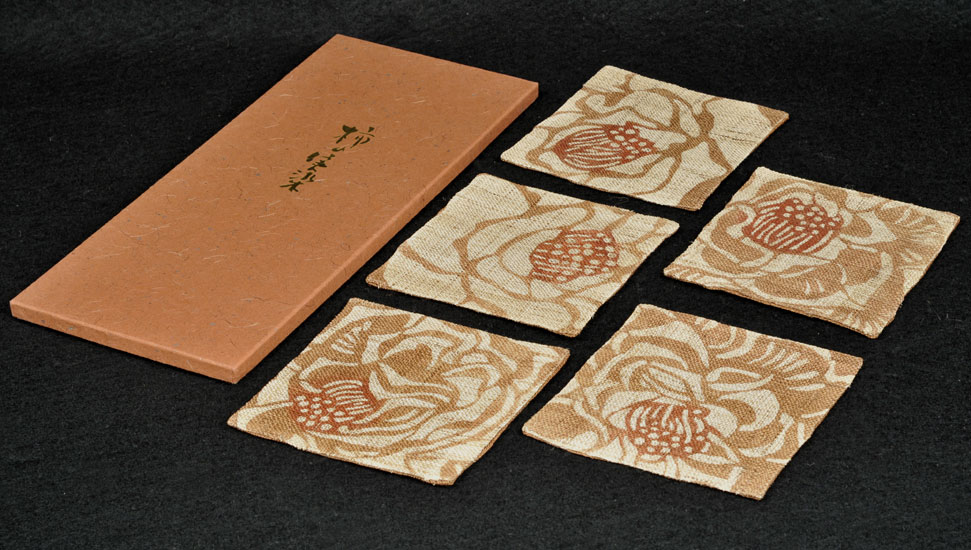
Coaster set No. 27 Rose 5/box 4.75" x 4.75" ea. Linen, kakishibu w/ modifiers, katazome Sold
|
|
|
|
|
Coaster set No. 28 Patchwork 5/box 4.75" x 4.75" ea. Linen, kakishibu w/ modifiers Sold
|
|
|
Solo Exhibitions (Masamichi Terada)
1996 Gallery Musouan, Kyoto Aoyama Art Space, Tokyo 1997 Gallery Musouan, Kyoto Suganami, Tokyo 1998 Imai Garou, Fukuyama Yuki Gallery, Okayama Honmachi Sousaku-jin-mura, Mita 1999 Hankyu Department Store, Kawanishi Kintetsu Department Store, Hirakata Takarazuka Art Square, Takarazuka 2001 Daimaru Department Store, Kobe 2002 Hankyu Department Store, Osaka Daimaru Department Store, Kobe 2003 Daimaru Department Store, Kobe Daimaru Department Store, Osaka 2004 Gallery Yasokawa, Kobe Daimaru Department Store, Kobe 2006 Gallery Yasokawa, Kobe 2007 Touching Stone gallery, Santa Fe, USA 2009 Touching Stone gallery, Santa Fe, USA
Presentations & Publications 1998 Introduction to Kakishibu. Senshoku Alpha Magazine. 1999 Lecture: Kakishibu, NHK Kobe Bunka Center 2000 Kakishibu Craft: Techniques of Kakishibu Dyeing. Kodama-sha Publisher. Yokyo, Japan.
|
 |
Home |
|
Current show |
|
Photography/Calligraphy |
|
Show archives |
|
Gallery tour |
|
|
Japanese pottery |
|
Tea bowls |
|
Sumi-e |
|
Wabi sabi |
Photography and web design by Touching Stone Images. All texts and images protected by US and international copyright laws.
Copyright © Touching Stone Gallery. All Rights Reserved.